Re-decking vs. refinishing
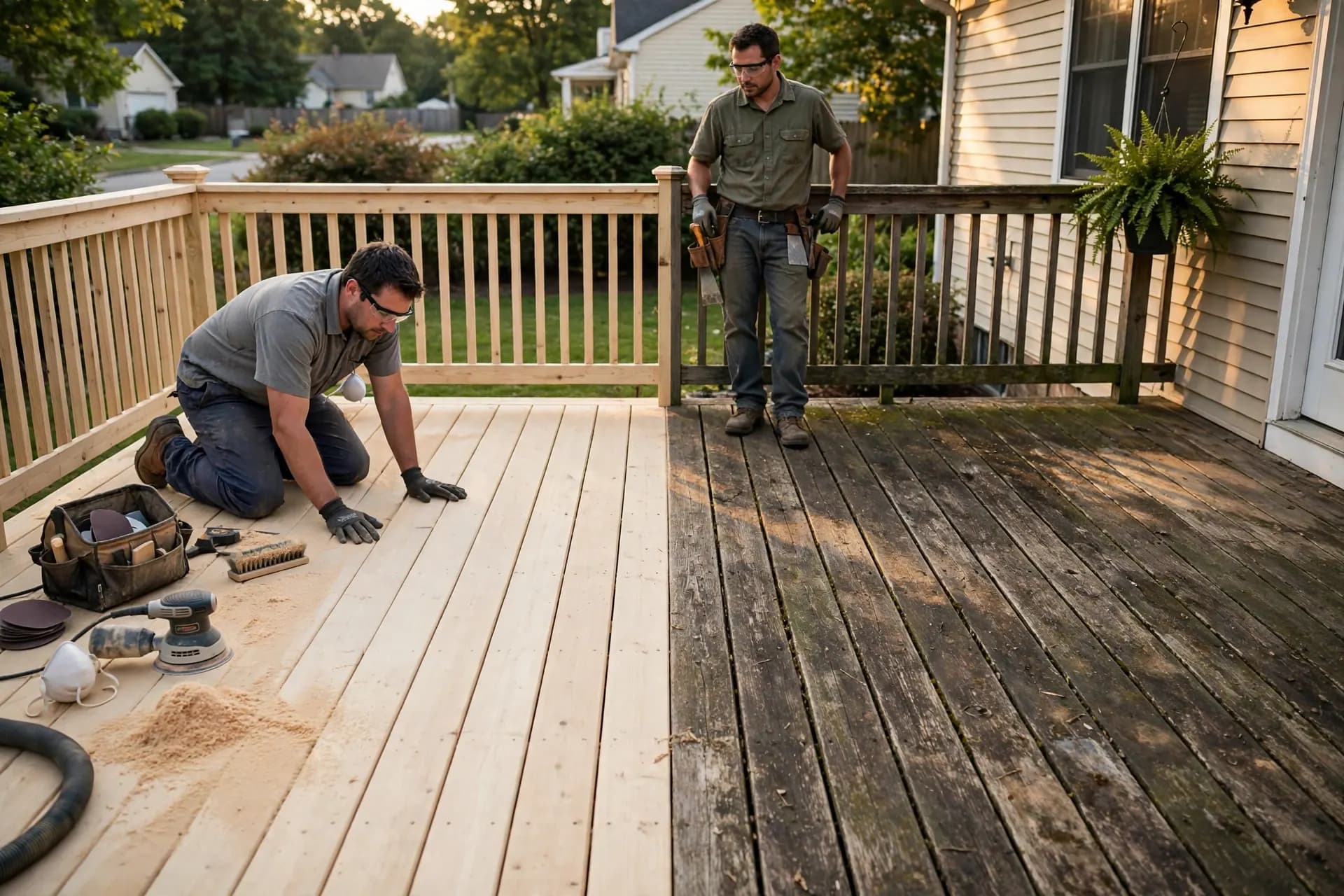
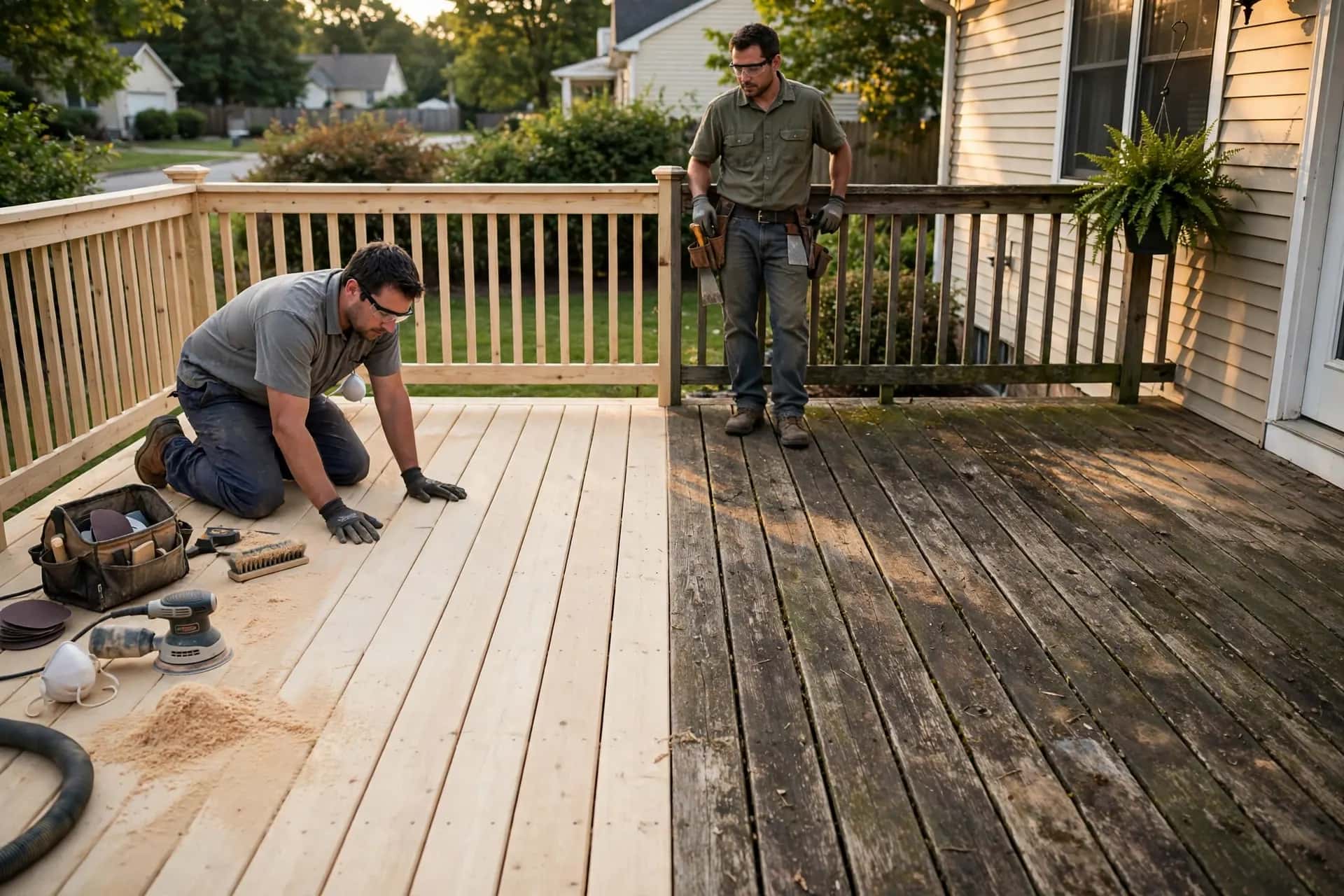
Re-decking replaces the surface boards, often switching to composite or PVC. Refinishing keeps the existing wood boards and restores them by cleaning, sanding and applying stain or sealer.
| Re-decking | Refinishing | |
|---|---|---|
| What changes | New boards (and often new railings) | Existing boards cleaned, sanded and stained |
| Best for | Worn, split or rotting boards; switching materials | Weathered but sound wood boards |
| Frame requirement | Sound frame, correct spacing for new boards | Sound frame and boards |
| Longevity | Resets surface lifespan | Needs repeating on a schedule |
Confirming the frame is sound first
Resurfacing is only worthwhile when joists, beams, posts, ledger and footings are in good condition. New boards on a failing frame have to come off again to fix the structure.
- Probe joist tops, especially under board seams, for rot.
- Check the ledger connection and flashing.
- Inspect connectors for corrosion.
- Confirm joist spacing suits the new decking material.
How a wood deck is refinished
- 1Replace any damaged boards and reset popped fasteners.
- 2Clean the surface with a deck cleaner; strip old finish if needed.
- 3Sand to remove raised grain and gray, weathered fibers.
- 4Let the wood dry thoroughly.
- 5Apply stain or sealer according to the product instructions.
What's the best material for resurfacing a deck?
Capped composite or PVC is the most common choice when re-decking, because it ends the staining cycle. Wood is still a good budget option on a sound frame.
Before choosing synthetic boards, confirm the joist spacing works — many older frames need added joists. Matching fascia and stair treads complete the update, and new railings are often installed at the same time.
How do you know a deck is a good candidate for resurfacing?
- Joists, beams and posts probe solid with no soft spots.
- The ledger is tight to the house and properly flashed.
- Footings haven't moved and the deck is level.
- Railings are solidly anchored or will be replaced.
- The layout still fits how you use the space.
How long does deck resurfacing take?
Refinishing typically takes a few days including drying time. Re-decking usually takes longer, depending on size, joist additions and railing work — still far less than a full rebuild.
How does deck resurfacing differ across the states we serve?
Resurfacing is most common where many decks are mid-life on sound frames. The figure varies most between Illinois (57%) and Massachusetts (33%).
| State | Homes built 1960–1999 | What it means |
|---|---|---|
| Georgia | 53% | Many homes in the 1960–1999 age band: high demand for deck resurfacing |
| Illinois | 57% | Many homes in the 1960–1999 age band: high demand for deck resurfacing |
| Kansas | 54% | Many homes in the 1960–1999 age band: high demand for deck resurfacing |
| Maryland | 57% | Many homes in the 1960–1999 age band: high demand for deck resurfacing |
| Massachusetts | 33% | A sizable share of aging homes: deck resurfacing is common |
| Minnesota | 49% | Many homes in the 1960–1999 age band: high demand for deck resurfacing |
| North Carolina | 38% | A sizable share of aging homes: deck resurfacing is common |
| Pennsylvania | 49% | Many homes in the 1960–1999 age band: high demand for deck resurfacing |
| Tennessee | 47% | Many homes in the 1960–1999 age band: high demand for deck resurfacing |
| Virginia | 57% | Many homes in the 1960–1999 age band: high demand for deck resurfacing |
| Washington | 49% | Many homes in the 1960–1999 age band: high demand for deck resurfacing |
Figures are medians across our covered communities in each state, from NOAA 1991–2020 climate normals and the Census Bureau's 2020–2024 American Community Survey. Each state and community page explains local conditions in more detail.