Why installation starts with the substructure
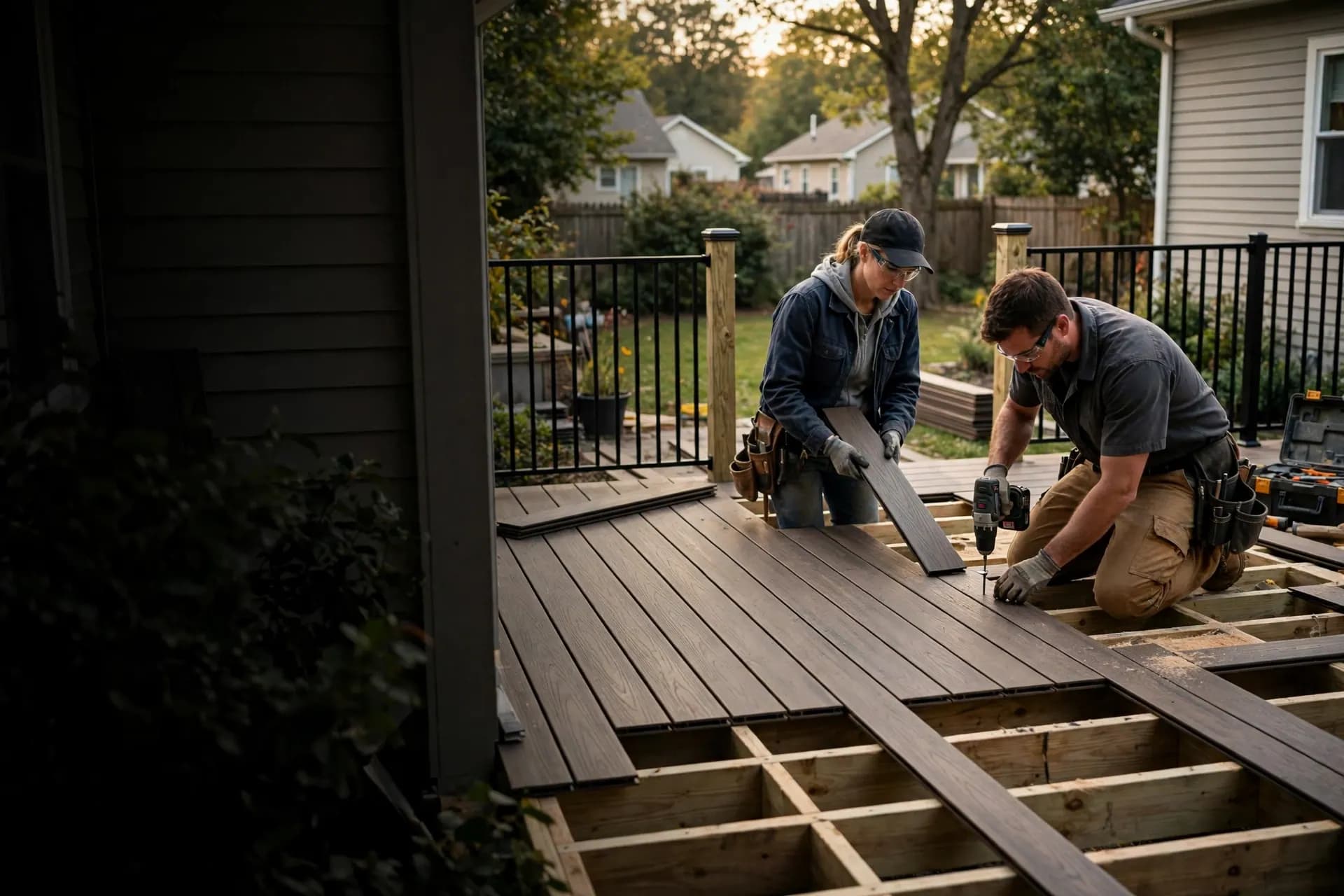
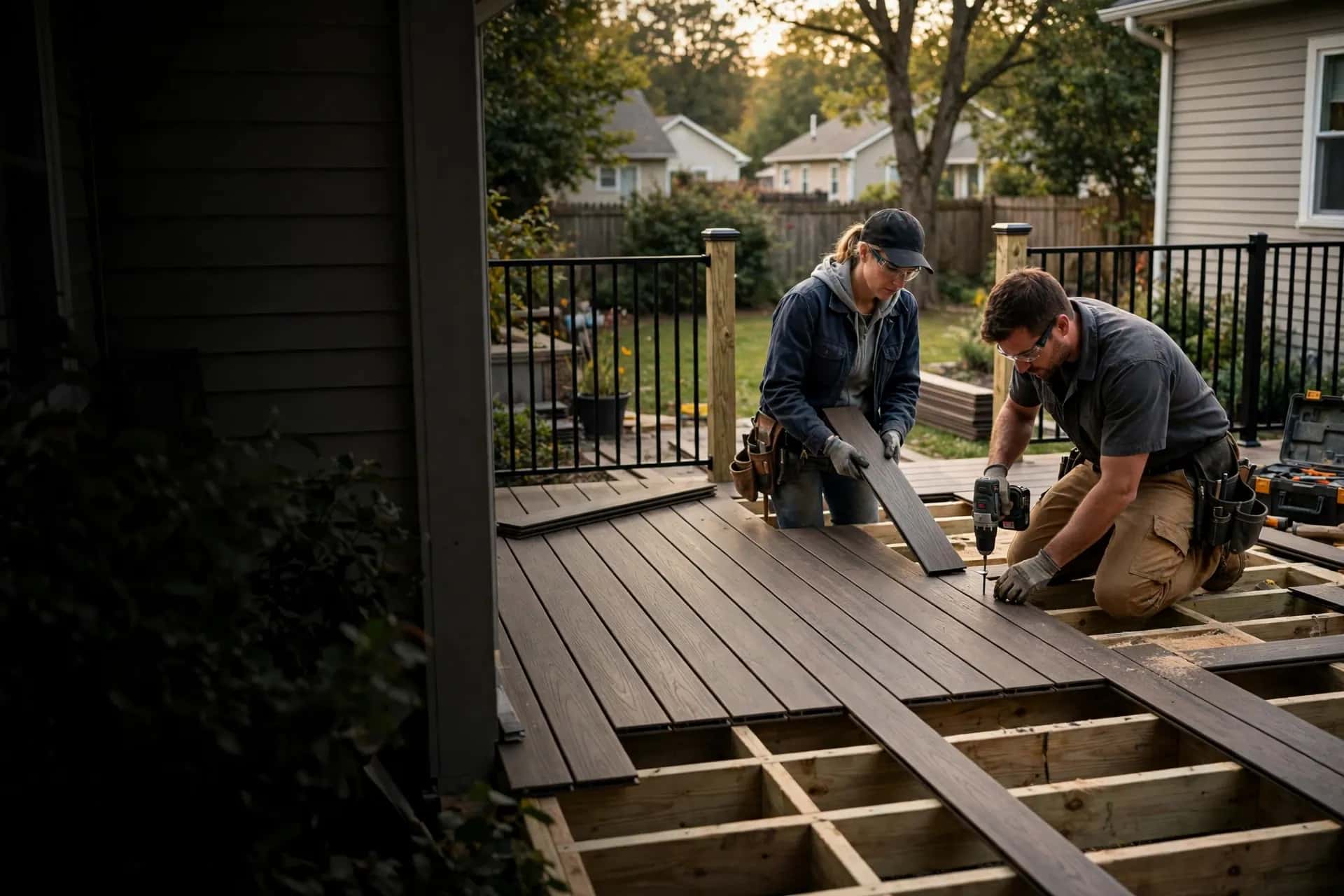
Decking boards are only as flat and secure as the joists under them. Joist spacing, crown direction, level and protection all have to be right before the first board goes down.
- Joist spacing must match the decking manufacturer's maximum span for the board type and layout angle.
- Joists should be set crown-up and planed or shimmed where needed so the surface doesn't wave.
- Blocking is added where board seams, picture frames or rail posts need extra support.
- Joist-top tape is often applied to help shed water from the tops of wood joists.
Hidden fasteners vs. face screws
Hidden fasteners clip into grooved board edges and leave a clean surface with consistent gaps. Face screws go through the top of the board; they are simple and strong but visible. The right choice depends on the board profile and the look you want.
| Method | Appearance | Works with | Notes |
|---|---|---|---|
| Hidden clips | No visible fasteners on the surface | Grooved-edge composite, PVC and some hardwood | Sets gap spacing automatically; individual boards can be harder to remove later |
| Face screws | Visible screw heads | Wood and square-edge boards | Simple and strong; use corrosion-resistant screws rated for treated lumber |
| Color-matched plugs | Screws hidden under matching plugs | Many composite and PVC boards | Common at board ends and picture-frame borders where clips can't be used |
Gapping, expansion and board layout
Every decking material moves. Wood swells and shrinks with moisture; composite and PVC expand and contract with temperature. Installers leave side gaps for drainage and end gaps for expansion according to the manufacturer's charts, often adjusting for the temperature on installation day.
Layout matters too. Staggered butt joints, breaker boards and picture-frame borders reduce visible seams and give board ends proper support. Planning the layout before cutting avoids short slivers at the edges and wasted material.
Finishing details that separate a good install
- Fascia boards that cover the rim joists and are fastened to allow movement.
- Clean, consistent overhangs at deck edges and stair nosings.
- Rail posts blocked and fastened to the frame, not just to a single board or rim.
- Ventilation under low decks so boards can dry from below.
- Site cleanup and removal of offcuts and packaging.
How long does deck installation take?
On a prepared frame, installing boards, railings and stairs typically takes days rather than weeks, depending on size, layout pattern and fastening system. Diagonal layouts, picture-frame borders and inlays add time.
How does deck installation differ across the states we serve?
Board color, gapping and installation timing respond to summer heat. The figure varies most between Tennessee (54) and Washington (2).
| State | 90°F+ days / yr (median) | What it means |
|---|---|---|
| Georgia | 51 | Hot summers: color, shade and heat build-up shape deck installation |
| Illinois | 17 | Some hot days: test colors and finishes for deck installation in full sun |
| Kansas | 39 | Some hot days: test colors and finishes for deck installation in full sun |
| Maryland | 25 | Some hot days: test colors and finishes for deck installation in full sun |
| Massachusetts | 14 | Mild summers: heat is a minor factor for deck installation |
| Minnesota | 8 | Mild summers: heat is a minor factor for deck installation |
| North Carolina | 49 | Hot summers: color, shade and heat build-up shape deck installation |
| Pennsylvania | 22 | Some hot days: test colors and finishes for deck installation in full sun |
| Tennessee | 54 | Hot summers: color, shade and heat build-up shape deck installation |
| Virginia | 30 | Some hot days: test colors and finishes for deck installation in full sun |
| Washington | 2 | Mild summers: heat is a minor factor for deck installation |
Figures are medians across our covered communities in each state, from NOAA 1991–2020 climate normals and the Census Bureau's 2020–2024 American Community Survey. Each state and community page explains local conditions in more detail.
Deck Installation specialties
- Hidden Fastener Deck InstallationHidden fastener installation attaches deck boards with clips that sit in grooves on the board edges, leaving a surface free of visible screws and with uniform gaps.
- Deck SkirtingDeck skirting encloses the space beneath a deck to hide framing and storage, finish the look and keep animals out — while still letting air move so the framing can dry.
- Deck LightingDeck lighting makes stairs and edges visible after dark and extends how long you can use the deck. It is easiest to plan during construction, when wiring can be hidden in the framing.