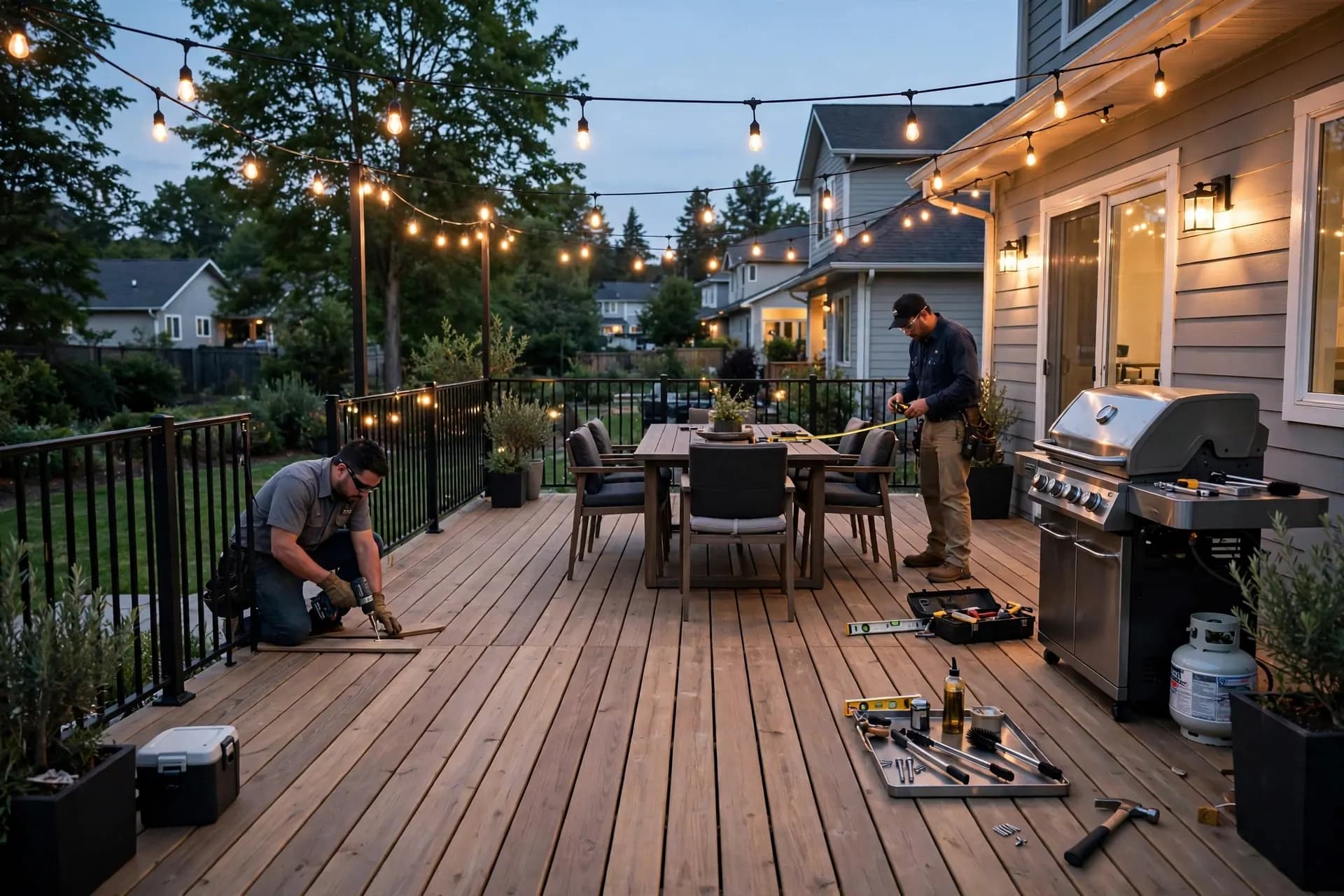
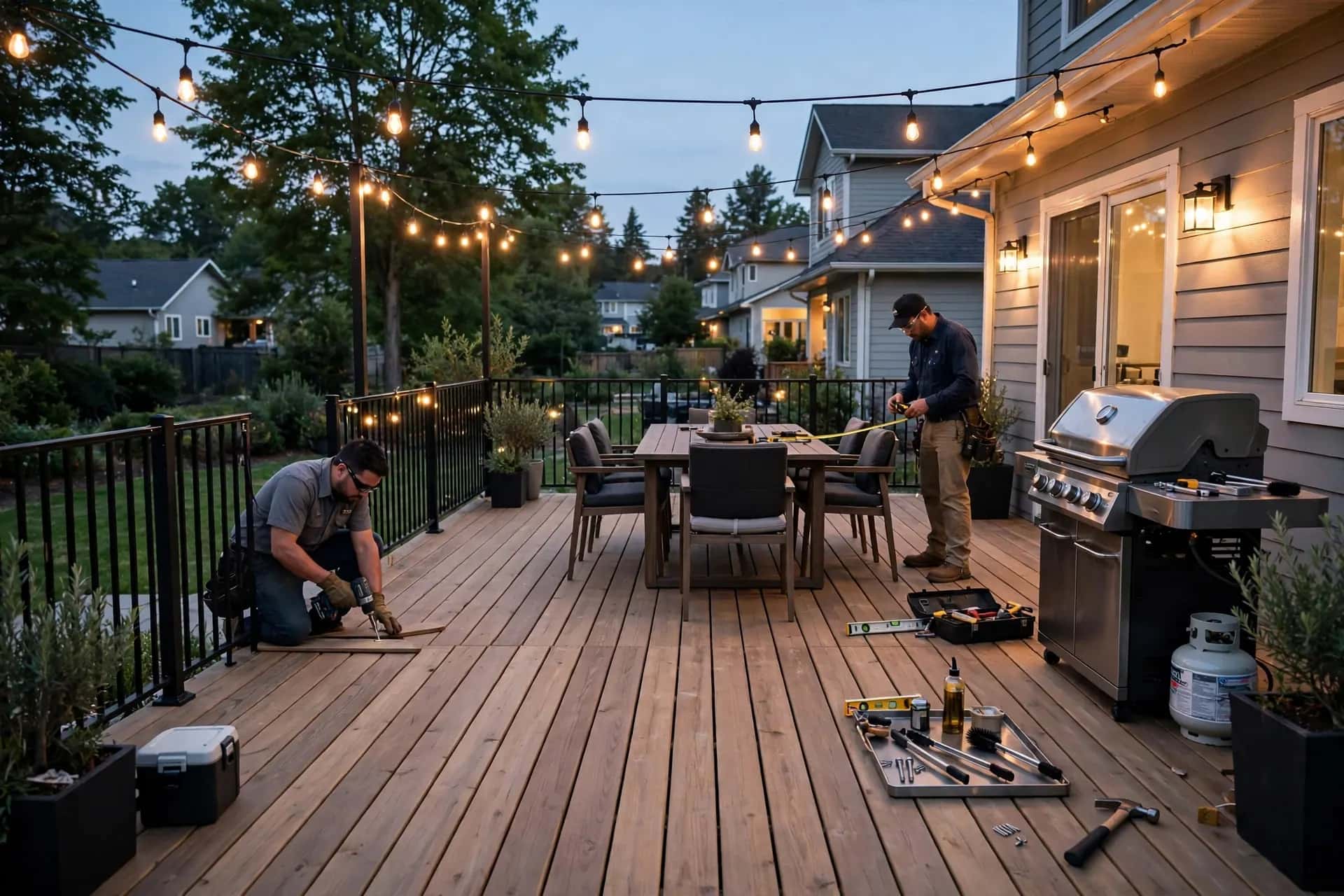
Which type of wood is best for a deck?
Pressure-treated pine is the most economical and widely available; cedar is lighter, naturally attractive and resists decay; tropical hardwoods are very dense and durable but cost more and are harder to work.
| Species | Appearance | Strengths | Watch-outs |
|---|---|---|---|
| Pressure-treated pine | Green or brown tint that weathers to gray | Lowest cost, widely available, treated against rot and insects | Can check, warp and split; needs sealing or staining |
| Cedar | Warm reddish-tan with rich grain | Naturally decay-resistant heartwood, light and stable, pleasant aroma | Softer and dents more easily; weathers to silver without finish |
| Tropical hardwood (e.g., ipe) | Deep brown, very fine grain | Very dense and durable | Higher cost, heavy, requires pre-drilling and specialty fasteners |
How much maintenance does a wood deck need?
Plan to clean a wood deck each year and re-apply a sealer or stain every one to three years, depending on the product, sun exposure and foot traffic.
- Sweep debris from between boards so they can drain and dry.
- Wash annually with a deck cleaner made for the species.
- Re-seal or re-stain when water no longer beads on the surface.
- Refasten popped nails or screws and replace split boards as needed.
Finishing new pressure-treated lumber
New pressure-treated lumber is often still wet from treatment. Many stain manufacturers recommend waiting until the wood has dried enough to absorb finish — a simple test is to sprinkle water on it; if it soaks in, it's generally ready. Follow the specific stain's instructions.
Why homeowners still choose wood
- Lower upfront cost, especially with pressure-treated pine.
- Authentic grain, texture and smell.
- Can be sanded and refinished, or re-stained a new color.
- Often stays cooler underfoot than dark composite in the sun.
Is wood decking a good choice in wet or cold climates?
It can be, with the right species, construction details and maintenance — but moisture and freeze-thaw shorten wood's life when sealing and cleaning are skipped.
Good airflow under the deck, gapped boards, flashing at the ledger and a regular sealing schedule are what let wood decks last in demanding climates.
How does wood decking differ across the states we serve?
Wood's maintenance schedule depends heavily on how often it gets wet. The figure varies most between Washington (95) and Minnesota (60).
| State | Wet days / yr (median) | What it means |
|---|---|---|
| Georgia | 80 | Frequent rain: flashing, drainage and airflow protect wood decking |
| Illinois | 74 | Drier spells: sun and checking are as important as moisture for wood decking |
| Kansas | 60 | Drier spells: sun and checking are as important as moisture for wood decking |
| Maryland | 81 | Frequent rain: flashing, drainage and airflow protect wood decking |
| Massachusetts | 82 | Frequent rain: flashing, drainage and airflow protect wood decking |
| Minnesota | 60 | Drier spells: sun and checking are as important as moisture for wood decking |
| North Carolina | 75 | Drier spells: sun and checking are as important as moisture for wood decking |
| Pennsylvania | 79 | Drier spells: sun and checking are as important as moisture for wood decking |
| Tennessee | 84 | Frequent rain: flashing, drainage and airflow protect wood decking |
| Virginia | 77 | Drier spells: sun and checking are as important as moisture for wood decking |
| Washington | 95 | Frequent rain: flashing, drainage and airflow protect wood decking |
Figures are medians across our covered communities in each state, from NOAA 1991–2020 climate normals and the Census Bureau's 2020–2024 American Community Survey. Each state and community page explains local conditions in more detail.