
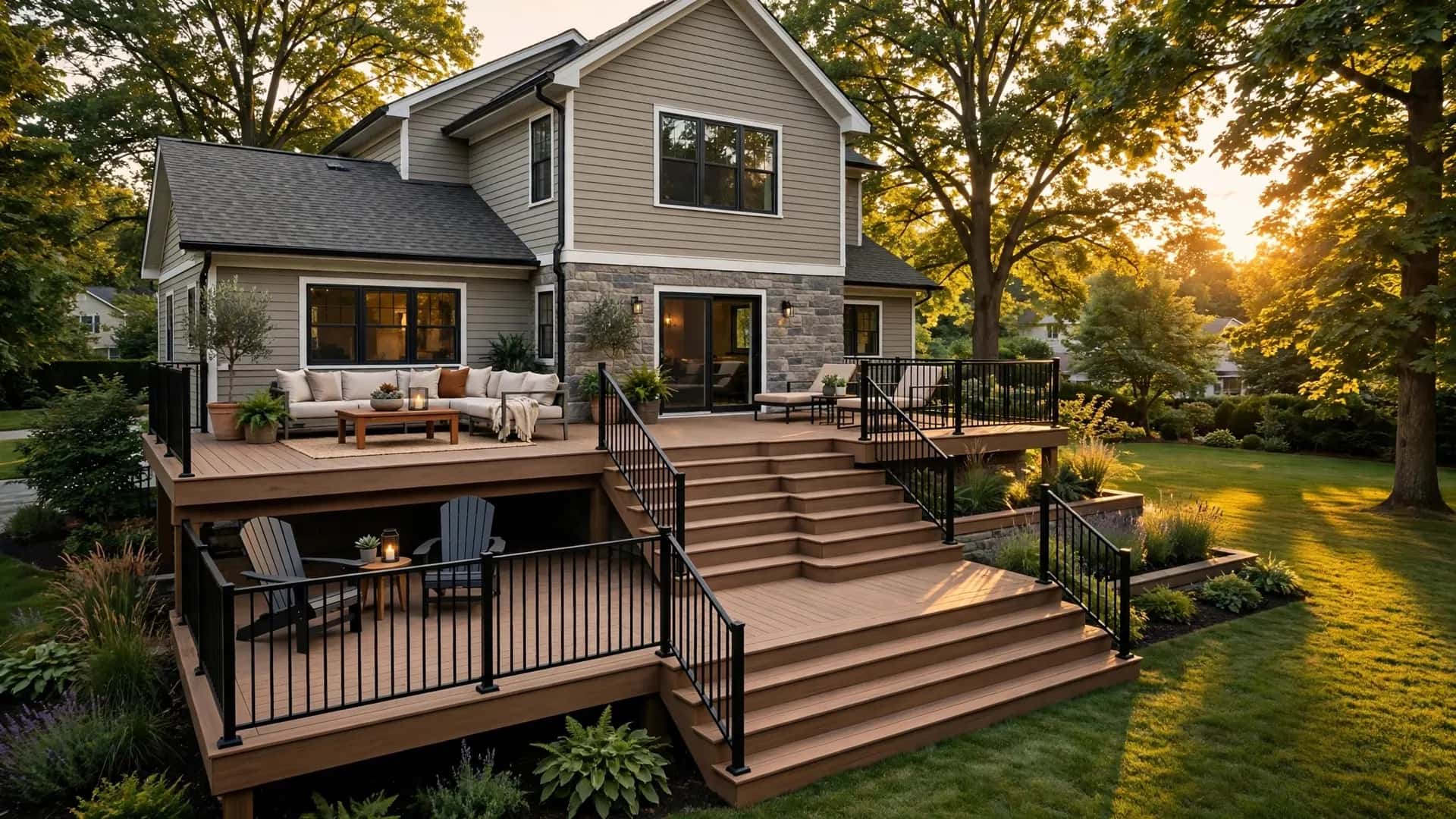
Capped vs. uncapped composite
Capped composite has a protective polymer shell on some or all sides; uncapped (first-generation) boards expose the wood-plastic core. Capped boards resist staining, fading and mold much better and are what most manufacturers sell today.
When comparing boards, look at how many sides are capped, the warranty's fade and stain coverage, and the manufacturer's joist-spacing and gapping requirements.
Caring for composite decking
- Sweep regularly so leaves and debris don't sit in gaps.
- Wash with mild soap and a soft brush; check the manufacturer's guidance on pressure washers.
- Clean grease spills promptly.
- Use snow shovels with plastic blades and ice-melt products the manufacturer approves.
Is composite decking worth it compared with wood?
Composite costs more upfront but removes the staining and sealing cycle. Over the years you own the deck, that maintenance difference narrows — or reverses — the cost gap.
If you plan to stay in your home for many years and don't want recurring finish work, composite is usually worth it. If upfront budget is tight, or you enjoy the look and feel of real wood and don't mind upkeep, wood still makes sense.
How do you choose a composite color?
- Order samples and view them outdoors in morning and afternoon light.
- Leave samples in direct sun to compare surface temperature.
- Consider multi-tone boards to hide dirt and pollen.
- Match or contrast with house trim and railing color.
- Lighter colors show less fading; darker colors show more dust.
What framing does composite decking need?
Composite is non-structural — it sits on a wood or metal frame. Joist spacing must match the manufacturer's requirement, which is often closer than for wood and closer again for diagonal layouts. Joist tape helps protect wood joists under the boards.
Can composite boards be repaired?
Light scratches can sometimes be blended with manufacturer-approved methods; deep gouges or heat damage usually mean replacing the board. Keep a few spare boards from your installation for future repairs, since colors change over time.
How does composite decking differ across the states we serve?
Composite's surface temperature depends on summer heat. The figure varies most between Tennessee (54) and Washington (2).
| State | 90°F+ days / yr (median) | What it means |
|---|---|---|
| Georgia | 51 | Hot summers: color, shade and heat build-up shape composite decking |
| Illinois | 17 | Some hot days: test colors and finishes for composite decking in full sun |
| Kansas | 39 | Some hot days: test colors and finishes for composite decking in full sun |
| Maryland | 25 | Some hot days: test colors and finishes for composite decking in full sun |
| Massachusetts | 14 | Mild summers: heat is a minor factor for composite decking |
| Minnesota | 8 | Mild summers: heat is a minor factor for composite decking |
| North Carolina | 49 | Hot summers: color, shade and heat build-up shape composite decking |
| Pennsylvania | 22 | Some hot days: test colors and finishes for composite decking in full sun |
| Tennessee | 54 | Hot summers: color, shade and heat build-up shape composite decking |
| Virginia | 30 | Some hot days: test colors and finishes for composite decking in full sun |
| Washington | 2 | Mild summers: heat is a minor factor for composite decking |
Figures are medians across our covered communities in each state, from NOAA 1991–2020 climate normals and the Census Bureau's 2020–2024 American Community Survey. Each state and community page explains local conditions in more detail.