Which deck railing style is best?
Choose by view, maintenance and budget: wood is economical; composite matches composite decking; aluminum is low-maintenance and slim; cable and glass preserve views but cost more.
| Style | Look | Maintenance | Notes |
|---|---|---|---|
| Wood | Traditional, paintable or stainable | Higher — needs finishing | Most economical; balusters can loosen over time |
| Composite / vinyl | Matches composite decking | Low | Usually sleeve-over-post systems |
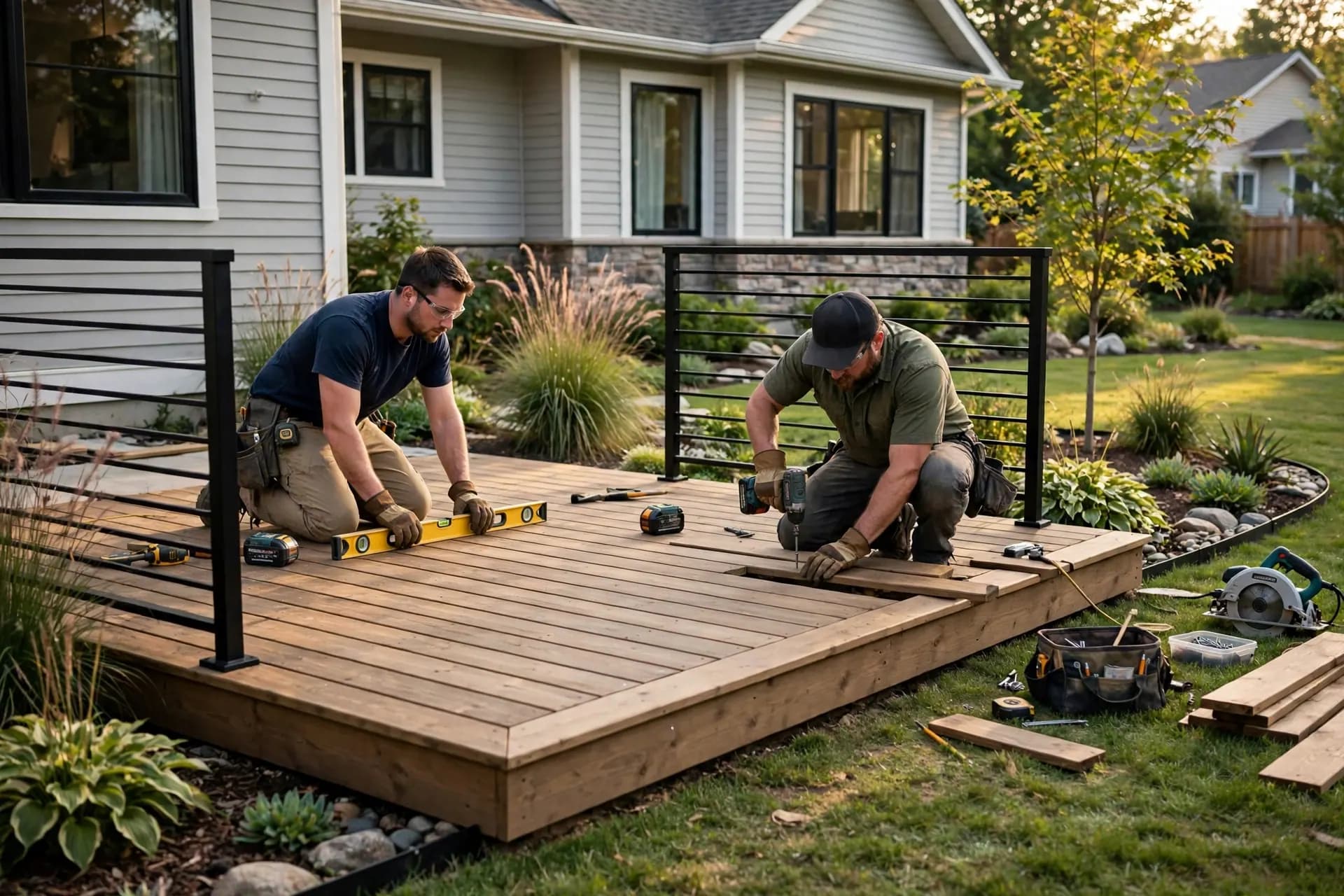
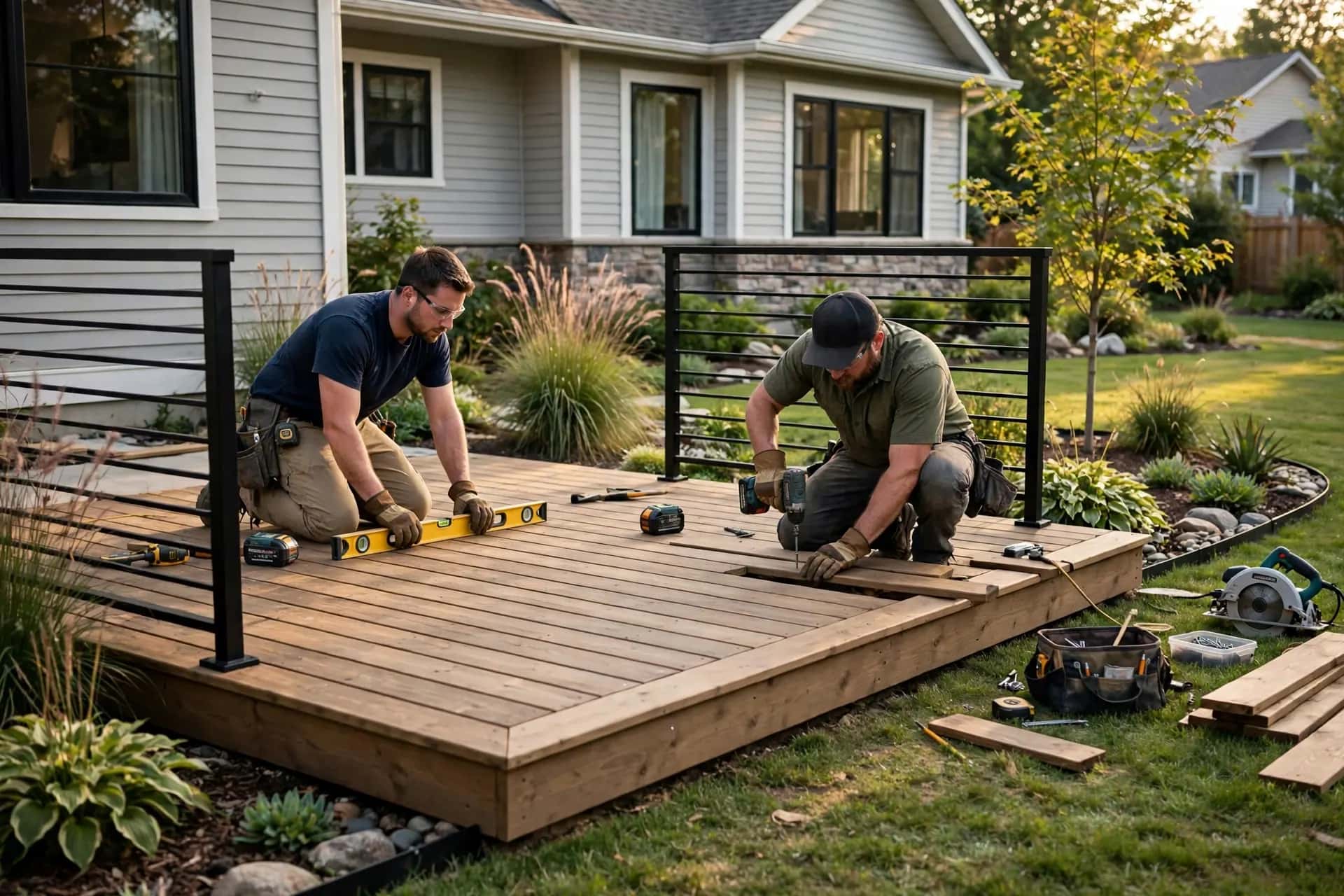
| Aluminum | Slim, modern, often black | Very low | Lightweight and corrosion-resistant |
| Cable | Open, minimal | Low; periodic tension checks | Preserves views; needs strong end posts |
| Glass panel | Unobstructed view | Regular cleaning | Premium cost; good wind shelter |
Railing safety: why the posts matter most
A railing is only as strong as its post connections. Posts should be bolted through properly blocked framing — not just nailed to a single rim board — so the guard resists the loads it is designed for.
Building codes set guard height, maximum opening sizes between balusters and load requirements, and these can differ between jurisdictions and between decks and stairs. Your local building department sets the requirements that apply to your home.
Stair railings and handrails
Stairs usually need both a guard on open sides and a graspable handrail. Handrail profile, height and continuity are regulated in many codes, so stair railings are planned together with the stairs, not added at the end.
When should a deck railing be replaced?
Replace a railing when posts are rotted or loose at many locations, balusters are widely spaced or failing, or when you want a better view or lower maintenance. Replacement is the chance to re-anchor posts with blocking and modern hardware.
Which railing systems do homeowners choose most?
Aluminum picket systems are popular for low maintenance and slim lines; composite railings match composite decks; cable and glass are chosen for views; wood remains the economical classic. Our sub-service pages cover each in detail.
How does deck railings differ across the states we serve?
Townhouse decks put more emphasis on railings, privacy and HOA rules. The figure varies most between Virginia (23%) and Washington (5%).
| State | Attached homes (townhouses) | What it means |
|---|---|---|
| Georgia | 7% | Mostly detached homes: more freedom in deck railings |
| Illinois | 10% | Mostly detached homes: more freedom in deck railings |
| Kansas | 7% | Mostly detached homes: more freedom in deck railings |
| Maryland | 21% | Many townhouses: elevated rear decks and HOA rules shape deck railings |
| Massachusetts | 6% | Mostly detached homes: more freedom in deck railings |
| Minnesota | 11% | Mostly detached homes: more freedom in deck railings |
| North Carolina | 6% | Mostly detached homes: more freedom in deck railings |
| Pennsylvania | 19% | Mostly detached homes: more freedom in deck railings |
| Tennessee | 8% | Mostly detached homes: more freedom in deck railings |
| Virginia | 23% | Many townhouses: elevated rear decks and HOA rules shape deck railings |
| Washington | 5% | Mostly detached homes: more freedom in deck railings |
Figures are medians across our covered communities in each state, from NOAA 1991–2020 climate normals and the Census Bureau's 2020–2024 American Community Survey. Each state and community page explains local conditions in more detail.
Deck Railings specialties
- Aluminum Deck RailingsAluminum deck railings are prefabricated, powder-coated systems with slim balusters. They don't rot or need painting, and their thin profile keeps views more open than wood.
- Cable Deck RailingsCable railings use horizontal stainless steel cables tensioned between sturdy posts. They nearly disappear from a distance, making them a favorite for decks with views.
- Glass Deck RailingsGlass deck railings use panels of safety glass held by posts, clamps or a base channel. They offer the clearest possible view and block wind, at a premium price.