When should a deck be replaced instead of repaired?
Replacement usually makes sense when problems are structural or widespread: rotted joists, beams or posts, a failing ledger connection, undersized footings, or when repairs would cost a large share of a new deck.
- Rot or soft spots in multiple joists, beams or posts — not just surface boards.
- A ledger that is pulling away from the house, or signs of water damage on the house wall behind it.
- Posts set directly in soil that have decayed at grade.
- Rusted or missing structural connectors such as joist hangers.
- Railings that move when pushed and can't be anchored solidly.
- A layout that no longer works — too small, awkward stairs or poor access.
Can any of the old deck be reused?
Sometimes the frame can stay and only the surface and railings are replaced. That is only appropriate after the structure has been inspected and confirmed sound and correctly spaced for the new decking.
Partial replacement — new boards and railings over the existing frame — can save money, but it locks the old frame into the next decade or more of service. If the frame is near the end of its life, a full rebuild avoids tearing up a new surface later to fix what's underneath.
Using a replacement to upgrade the deck
- Resize or reshape the deck around how you actually use it now.
- Move or widen stairs for better flow to the yard.
- Switch from wood to composite or PVC to reduce staining and sealing.
- Upgrade to aluminum, cable or glass-panel railings for better views.
- Add lighting, built-in seating or a privacy screen during the rebuild.
What demolition involves
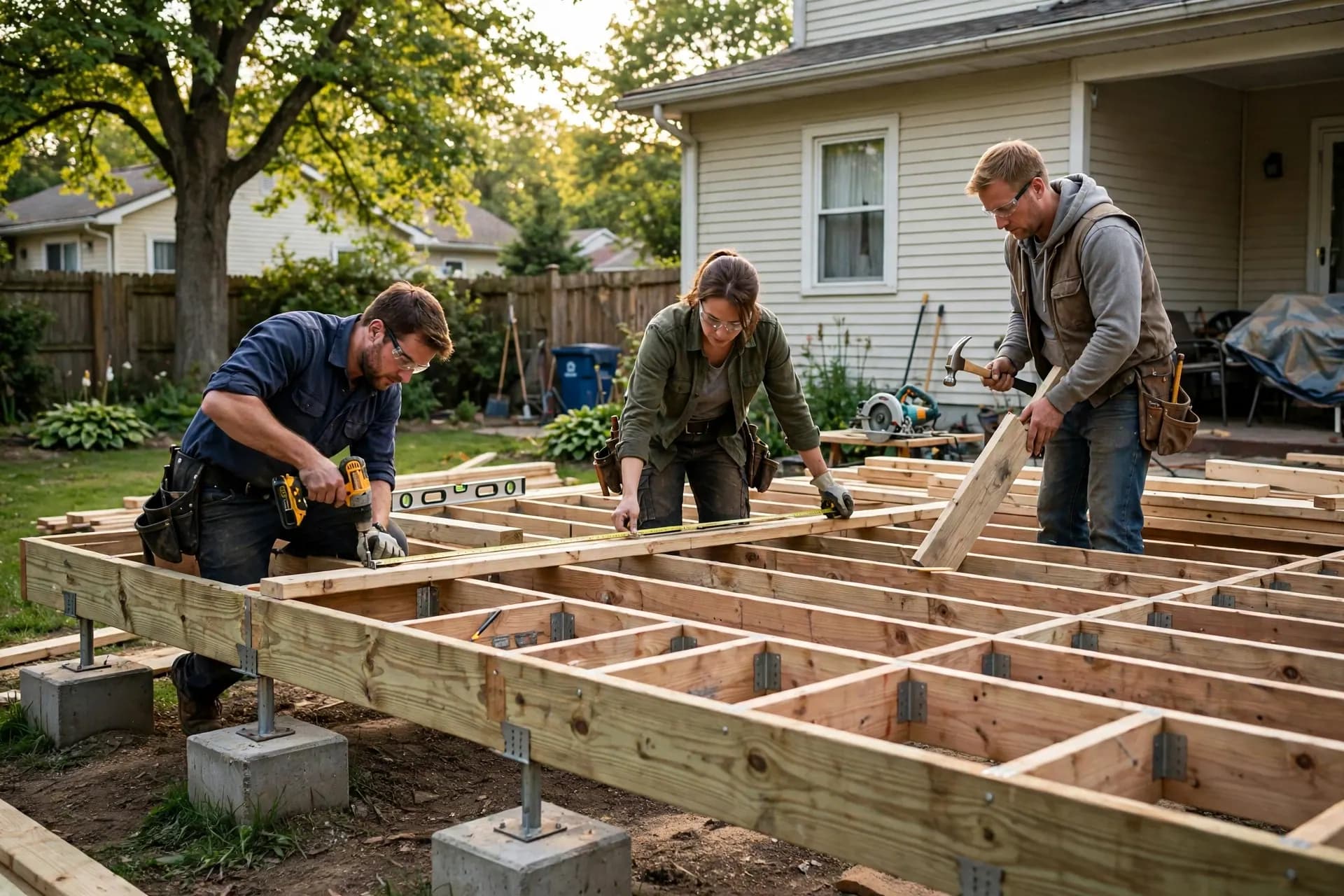
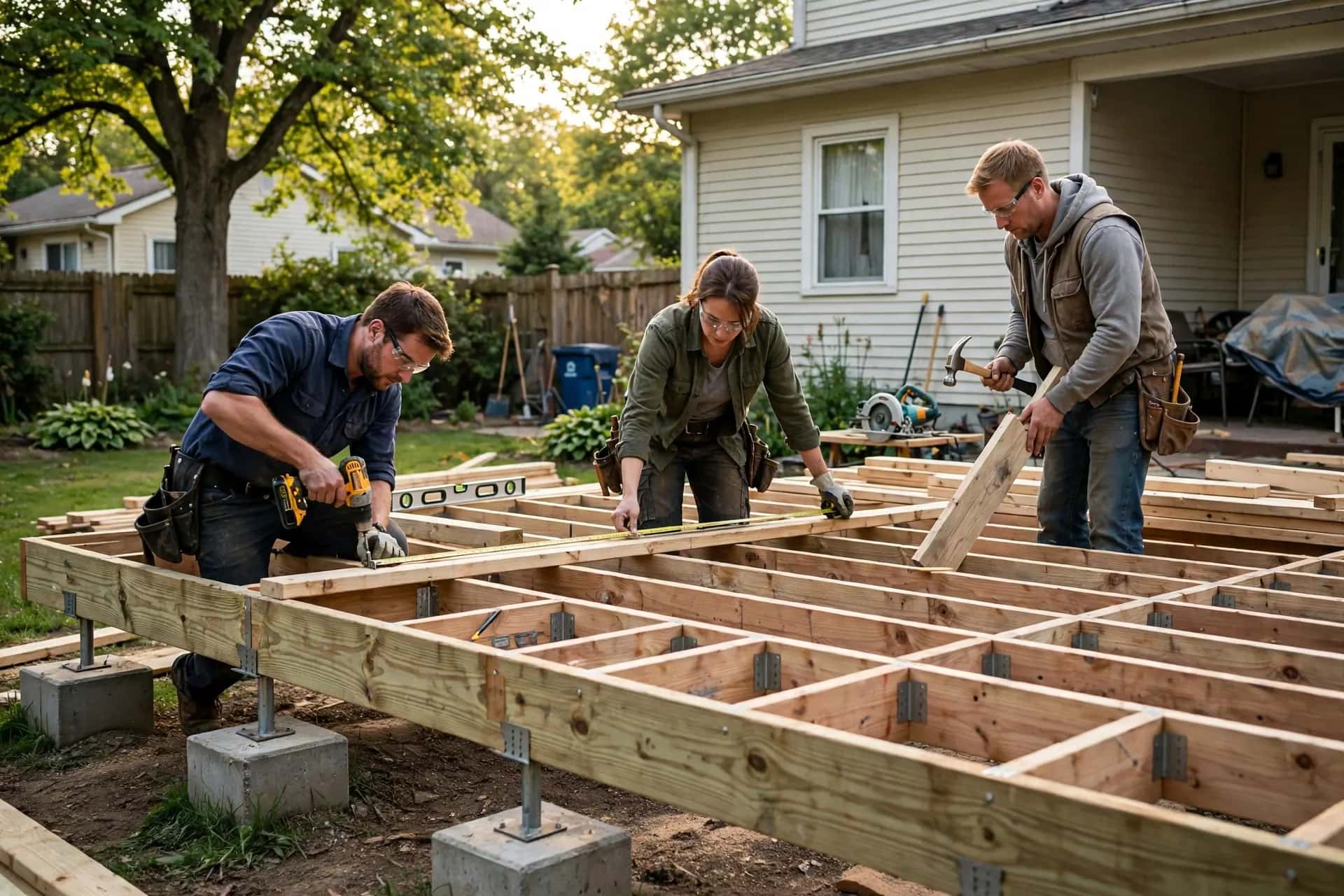
Removal includes taking up boards, railings and stairs, dismantling the frame, removing or abandoning old footings and hauling debris away. Treated lumber should not be burned. When the ledger comes off, the house wall behind it is exposed — the right time to check sheathing and rim joist condition and install new flashing.
How long does a deck replacement take?
Demolition usually takes a day or two. Rebuilding depends on size, height and permitting, and any wall repairs found behind the old ledger add time. Plan permits and material orders before the old deck comes down.
How does deck replacement differ across the states we serve?
Replacement demand tracks the share of homes old enough to have aging decks. The figure varies most between Illinois (57%) and Massachusetts (33%).
| State | Homes built 1960–1999 | What it means |
|---|---|---|
| Georgia | 53% | Many homes in the 1960–1999 age band: high demand for deck replacement |
| Illinois | 57% | Many homes in the 1960–1999 age band: high demand for deck replacement |
| Kansas | 54% | Many homes in the 1960–1999 age band: high demand for deck replacement |
| Maryland | 57% | Many homes in the 1960–1999 age band: high demand for deck replacement |
| Massachusetts | 33% | A sizable share of aging homes: deck replacement is common |
| Minnesota | 49% | Many homes in the 1960–1999 age band: high demand for deck replacement |
| North Carolina | 38% | A sizable share of aging homes: deck replacement is common |
| Pennsylvania | 49% | Many homes in the 1960–1999 age band: high demand for deck replacement |
| Tennessee | 47% | Many homes in the 1960–1999 age band: high demand for deck replacement |
| Virginia | 57% | Many homes in the 1960–1999 age band: high demand for deck replacement |
| Washington | 49% | Many homes in the 1960–1999 age band: high demand for deck replacement |
Figures are medians across our covered communities in each state, from NOAA 1991–2020 climate normals and the Census Bureau's 2020–2024 American Community Survey. Each state and community page explains local conditions in more detail.