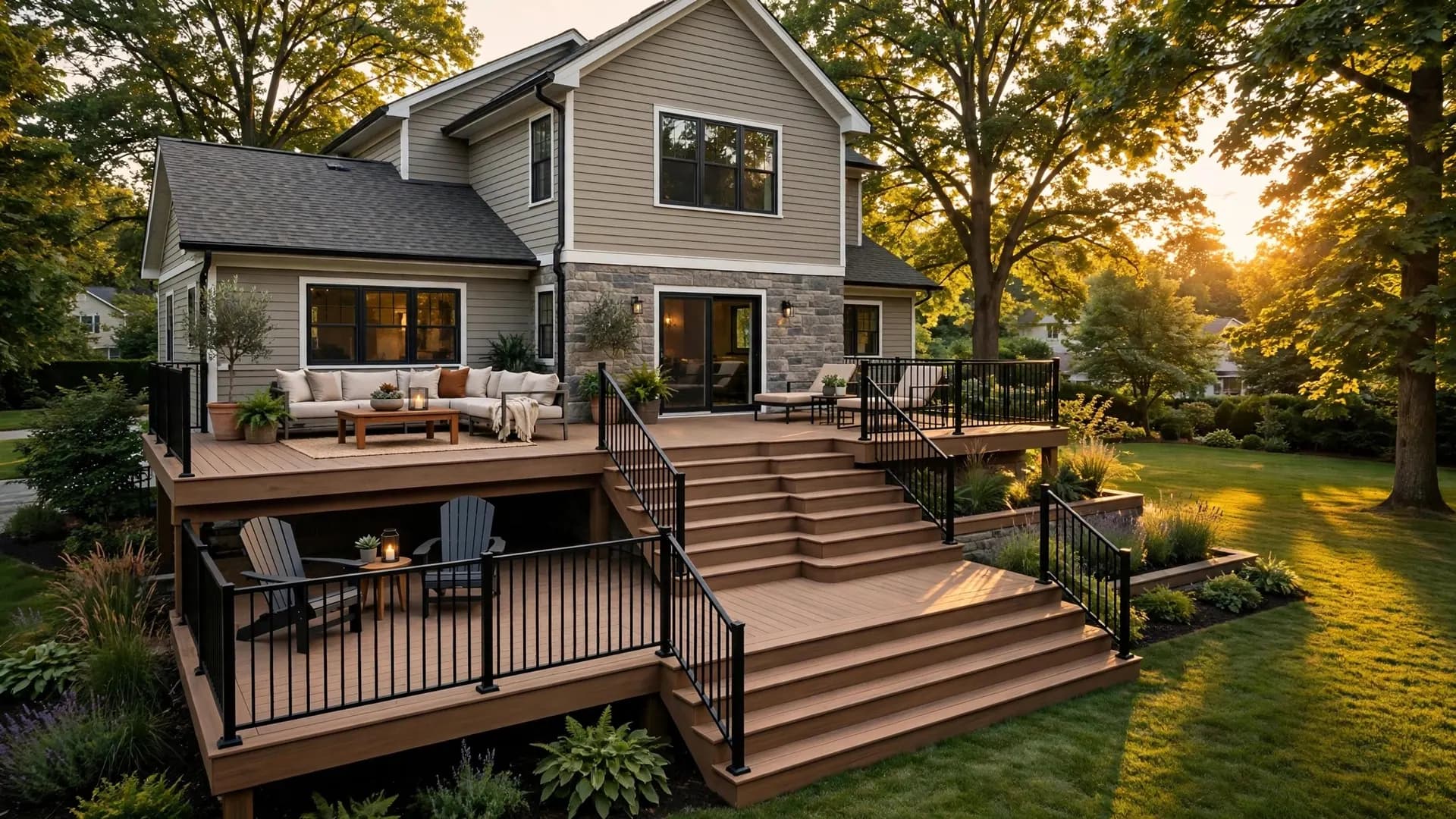
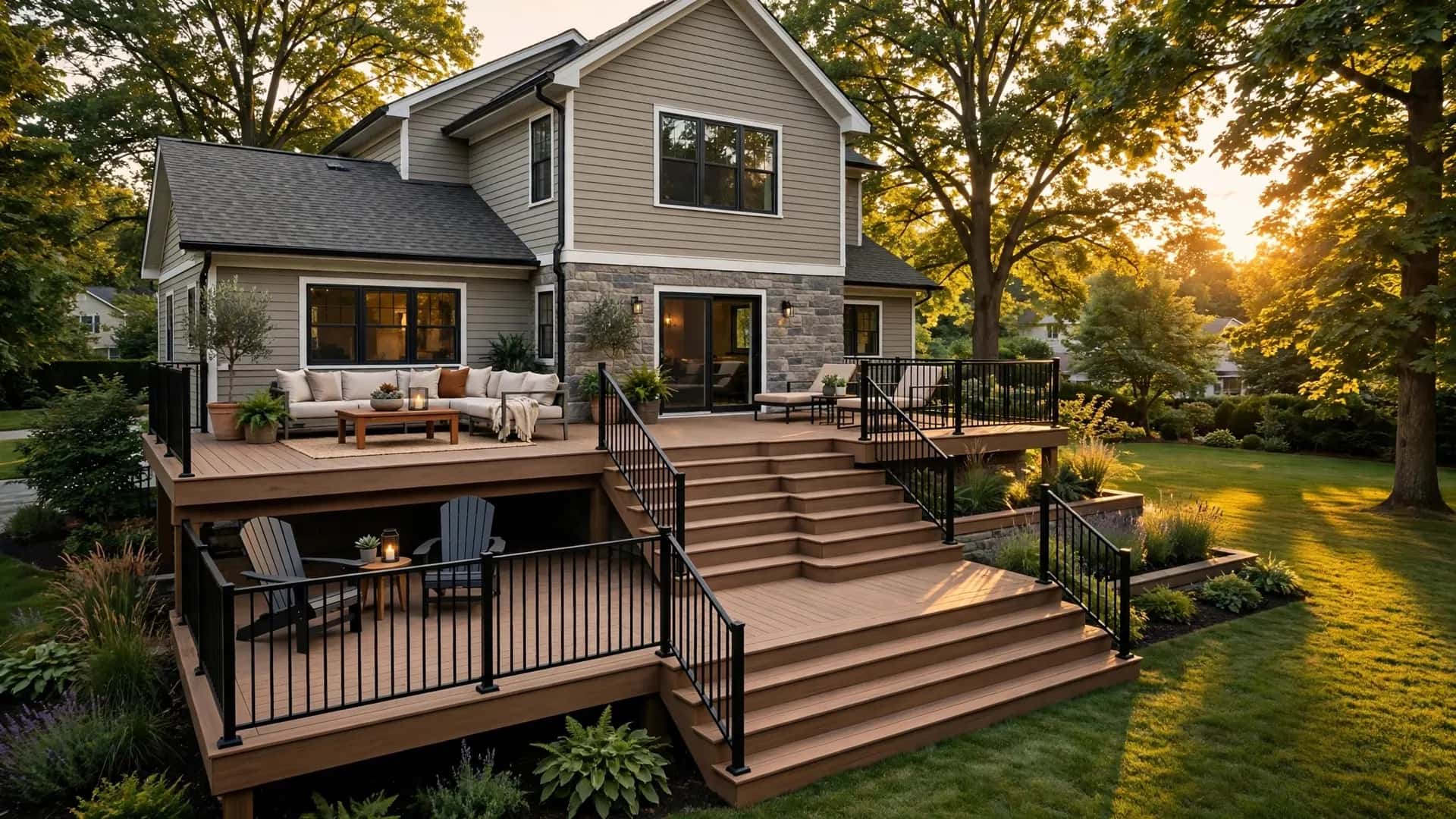
What are the benefits of composite decking?
Composite's main advantages are low maintenance, consistent appearance, resistance to rot and insects, and no splinters. You wash it periodically instead of staining and sealing it.
- No staining, sealing or painting.
- Capped boards resist fading and staining better than uncapped boards.
- Consistent color and profile from board to board.
- Won't split or splinter the way weathered wood can.
- Long manufacturer warranties are common — read what they cover and what installation they require.
Composite decking tradeoffs
Composite usually costs more upfront than pressure-treated wood, can get hot in direct sun (especially darker colors), expands and contracts with temperature, and can't be refinished the way wood can.
- Higher material cost than pressure-treated pine.
- Darker colors absorb more heat — lighter colors and shade help on sunny decks.
- Boards move with temperature, so gapping must follow the manufacturer's chart.
- Scratches can't be sanded out like wood.
- The substructure is still usually wood and still needs to be built to last.
Heat and color: choosing the right board
Surface temperature depends on color, sun exposure and the board's composition. On a deck with full afternoon sun, lighter tones and boards marketed with heat-mitigating technology are worth considering. Order physical samples and leave them in the sun where the deck will be before deciding.
Installation details that matter with composite
- Joist spacing is set by the manufacturer — often closer than for wood, and closer still for diagonal layouts.
- Hidden fastener systems need grooved-edge boards; square-edge boards are used at borders and stairs.
- End gaps depend on board length and temperature at installation.
- Stair treads often require tighter stringer spacing than the main deck.
- Fascia and trim should be fastened to allow movement.
When composite is — and isn't — a good fit
| Composite is a strong fit when… | Consider other options when… |
|---|---|
| You want to stop staining and sealing | Upfront budget is the top priority |
| The deck gets heavy use and you want a consistent look | The deck sits in full sun and you prefer dark colors underfoot |
| You plan to stay in the home long-term | You love the look and feel of real wood and don't mind upkeep |
How long does composite decking last?
Capped composite is designed for long service with routine cleaning, and manufacturers offer long warranties for stains and fading. The frame beneath — usually pressure-treated wood — determines how long the whole deck lasts, so framing protection matters.
How does composite decking differ across the states we serve?
Surface temperature is composite's main tradeoff, and it depends on summer heat. The figure varies most between Tennessee (54) and Washington (2).
| State | 90°F+ days / yr (median) | What it means |
|---|---|---|
| Georgia | 51 | Hot summers: color, shade and heat build-up shape composite decking |
| Illinois | 17 | Some hot days: test colors and finishes for composite decking in full sun |
| Kansas | 39 | Some hot days: test colors and finishes for composite decking in full sun |
| Maryland | 25 | Some hot days: test colors and finishes for composite decking in full sun |
| Massachusetts | 14 | Mild summers: heat is a minor factor for composite decking |
| Minnesota | 8 | Mild summers: heat is a minor factor for composite decking |
| North Carolina | 49 | Hot summers: color, shade and heat build-up shape composite decking |
| Pennsylvania | 22 | Some hot days: test colors and finishes for composite decking in full sun |
| Tennessee | 54 | Hot summers: color, shade and heat build-up shape composite decking |
| Virginia | 30 | Some hot days: test colors and finishes for composite decking in full sun |
| Washington | 2 | Mild summers: heat is a minor factor for composite decking |
Figures are medians across our covered communities in each state, from NOAA 1991–2020 climate normals and the Census Bureau's 2020–2024 American Community Survey. Each state and community page explains local conditions in more detail.