
By Deck Building Services · Last reviewed
What decides repair versus replacement?
The condition of the structure. Surface problems on a sound frame are repairs or resurfacing; widespread structural damage means replacement.
| Situation | Usually |
|---|---|
| A few rotted or split boards | Repair |
| One loose railing section or stair | Repair |
| Weathered surface, sound frame | Resurface or refinish |
| Rot in multiple joists or beams | Replace the frame |
| Ledger pulling away or wall damage behind it | Major repair or replace |
| Footings heaved or posts rotted at many locations | Replace |
| Deck too small or awkward for current use | Replace or rebuild |
Which problems are urgent safety issues?
- Ledger separating from the house.
- Posts leaning, cracked or rotted at the base.
- Railings that move under hand pressure.
- Stairs that move or have rotted stringers.
- Visible sagging or new slope.
When does repair stop making financial sense?
Repairs are good value when they're isolated. Once you're repairing framing in several places, the deck is old enough that other hidden damage is likely, and new boards or railings would sit on a structure near the end of its life. At that point a planned replacement avoids paying twice.
What does a professional deck evaluation include?
A structural walk-through from the ground up: footings and posts, beams, joists and hangers, the ledger and its flashing, railings under load, stairs and landings, and finally the surface.
The goal is to separate cosmetic wear from structural problems and to estimate how much life the frame has left. A useful evaluation ends with a clear recommendation — repair specific items, resurface on the existing frame, or replace — and explains why, so you can compare the options rather than guess.
Is there a middle option between repair and replacement?
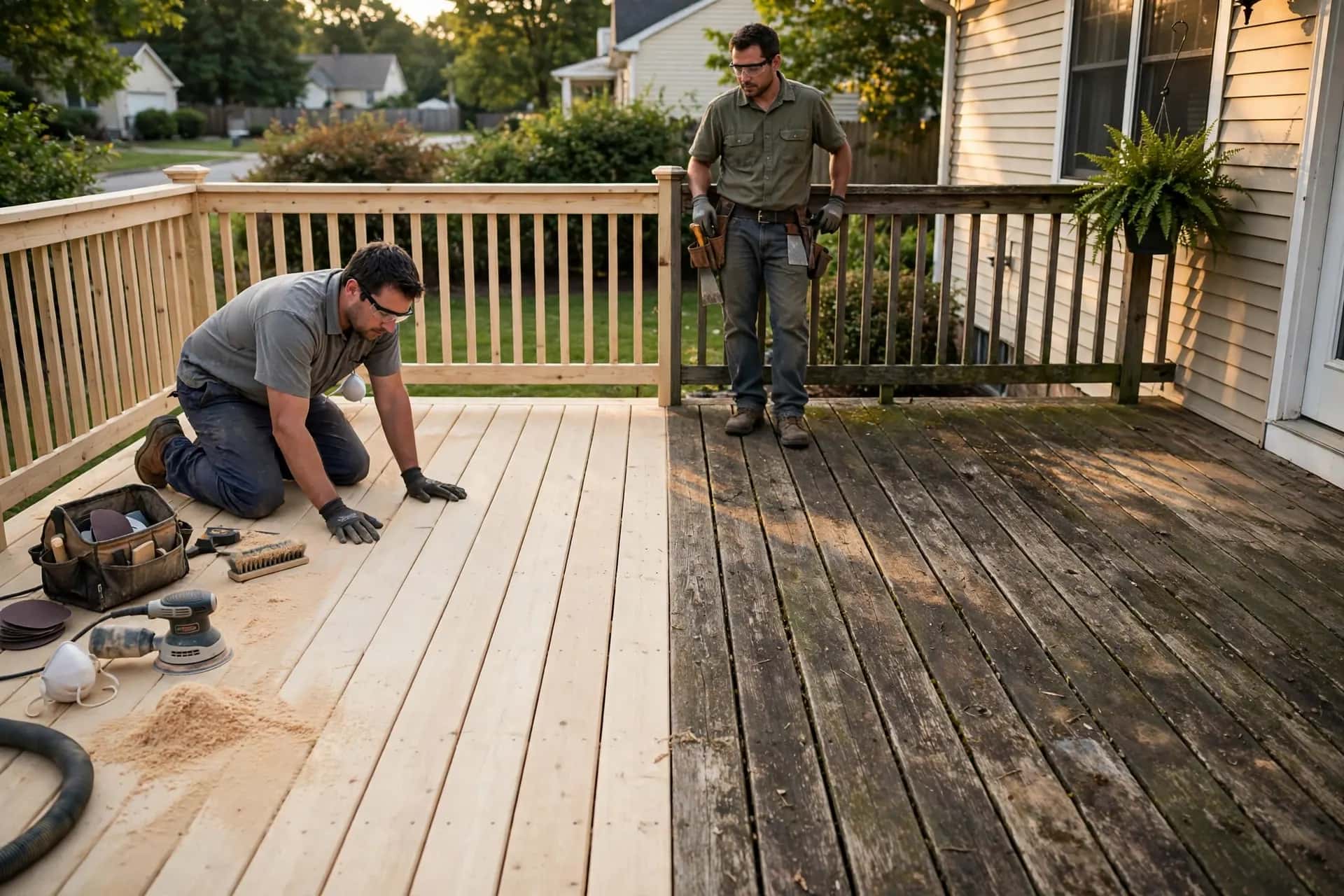
Yes — resurfacing. If the frame is sound, new boards and railings over the existing structure give a like-new deck for less than a rebuild.
How does should you repair or replace your deck differ across the states we serve?
The share of homes in the 1960–1999 age band shows where aging decks are most common. The figure varies most between Illinois (57%) and Massachusetts (33%).
| State | Homes built 1960–1999 | What it means |
|---|---|---|
| Georgia | 53% | Many homes in the 1960–1999 age band: high demand for should you repair or replace your deck |
| Illinois | 57% | Many homes in the 1960–1999 age band: high demand for should you repair or replace your deck |
| Kansas | 54% | Many homes in the 1960–1999 age band: high demand for should you repair or replace your deck |
| Maryland | 57% | Many homes in the 1960–1999 age band: high demand for should you repair or replace your deck |
| Massachusetts | 33% | A sizable share of aging homes: should you repair or replace your deck is common |
| Minnesota | 49% | Many homes in the 1960–1999 age band: high demand for should you repair or replace your deck |
| North Carolina | 38% | A sizable share of aging homes: should you repair or replace your deck is common |
| Pennsylvania | 49% | Many homes in the 1960–1999 age band: high demand for should you repair or replace your deck |
| Tennessee | 47% | Many homes in the 1960–1999 age band: high demand for should you repair or replace your deck |
| Virginia | 57% | Many homes in the 1960–1999 age band: high demand for should you repair or replace your deck |
| Washington | 49% | Many homes in the 1960–1999 age band: high demand for should you repair or replace your deck |
Figures are medians across our covered communities in each state, from NOAA 1991–2020 climate normals and the Census Bureau's 2020–2024 American Community Survey. Each state and community page explains local conditions in more detail.