
By Deck Building Services · Last reviewed
When does a deck usually need a permit?
Commonly when it's attached to the house, above a certain height, larger than a set size, or serves a required exit door. Small, low, freestanding platforms are sometimes exempt — but only your local code can confirm it.
Who issues deck permits?
Incorporated cities, towns and villages generally run their own building departments. Unincorporated areas are usually served by the county. Some states adopt a statewide residential code that local departments enforce; others leave code adoption to each municipality. Our state pages explain the general setup in each state we serve.
What does a deck permit application usually need?
- A site plan showing the deck's location and distances to property lines.
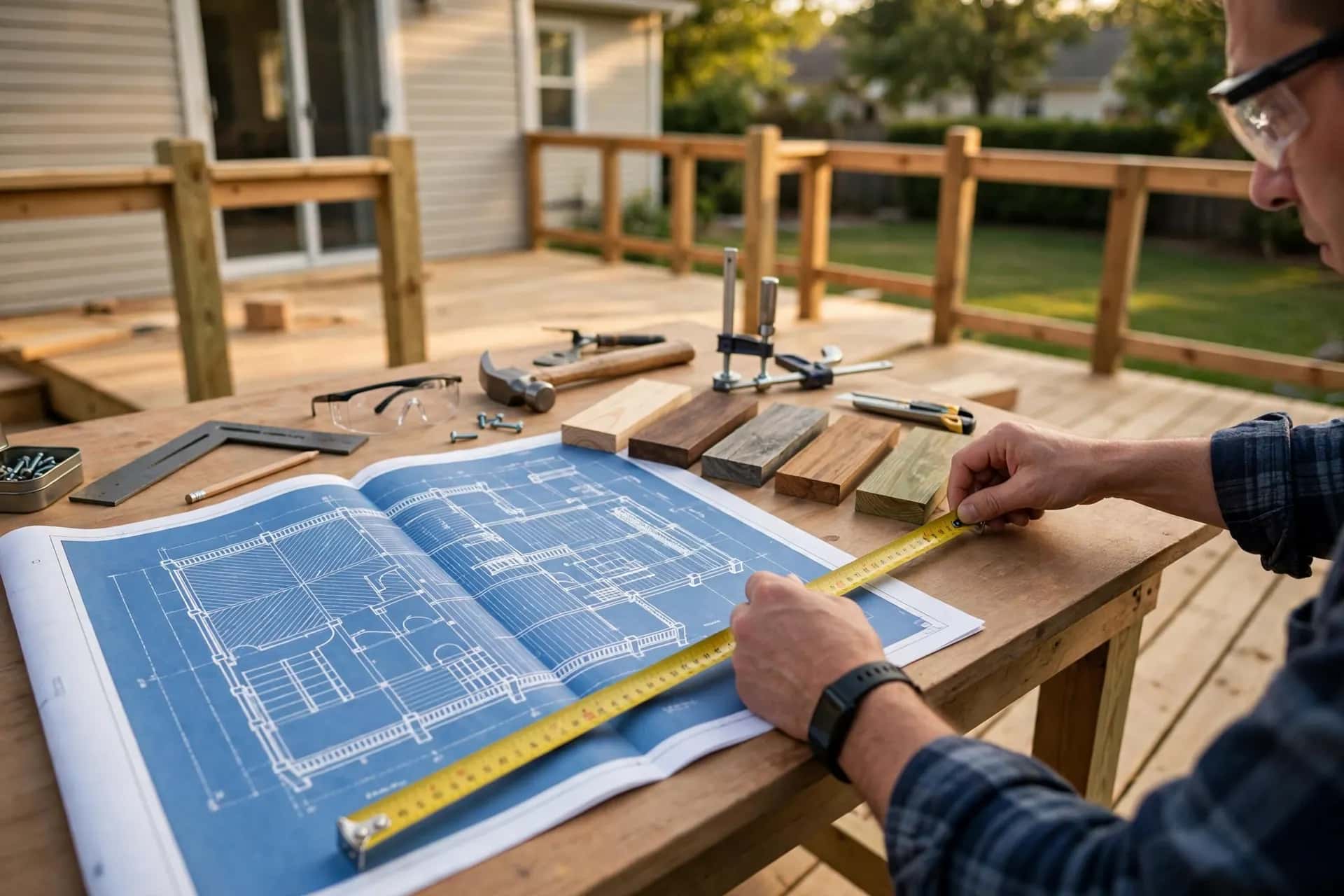
- Construction drawings: footing size and depth, beam and joist sizes and spans, ledger attachment, guards and stairs.
- Material and connector specifications.
- Sometimes HOA approval, which is separate from the permit.
What inspections are typical for decks?
- Footing inspection before concrete is poured.
- Framing inspection before decking hides the structure (in some jurisdictions).
- Final inspection of guards, stairs and overall construction.
How do you find the deck rules for your address?
- 1Confirm whether your address is in a municipality or an unincorporated area.
- 2Visit that jurisdiction's building or permitting website, or call the office.
- 3Ask whether your planned deck needs a permit and what drawings are required.
- 4Ask about setbacks, height limits and required inspections.
- 5Check HOA covenants separately.
- 6Call 811 before digging footings.
What happens if a deck is built without a required permit?
Consequences vary but can include stop-work orders, fines, having to open up finished work for inspection, or problems when the home is sold. Unpermitted decks also lack the independent inspection that catches structural mistakes.
How are deck permits handled in the states we serve?
| State | How codes are adopted and enforced |
|---|---|
| Georgia | Georgia adopts statewide minimum construction codes that local governments enforce, often with local amendments. Your city or county building department issues deck permits. |
| Illinois | Illinois building codes for single-family homes are largely adopted and enforced at the municipal and county level, so requirements differ between suburbs. Contact your village or city building department. |
| Kansas | Kansas does not enforce a single statewide residential building code; cities and counties adopt and enforce their own. Contact your city's building or permitting office. |
| Maryland | Maryland adopts a statewide building performance standard, and counties and municipalities enforce it, often with local amendments. Your county permitting office issues deck permits. |
| Massachusetts | Massachusetts uses a statewide building code (780 CMR) administered by the Board of Building Regulations and Standards and enforced by local building officials. |
| Minnesota | Minnesota has a statewide building code administered by the Department of Labor and Industry and enforced by municipalities that have adopted it. |
| North Carolina | North Carolina uses a statewide building code, with residential code administration coordinated through the Office of State Fire Marshal and enforced by local inspection departments. |
| Pennsylvania | Pennsylvania's Uniform Construction Code applies statewide and is enforced by municipalities or third-party agencies they designate. Contact your township or borough. |
| Tennessee | Tennessee building code adoption and enforcement vary by local jurisdiction. Contact your city or county codes department. |
| Virginia | Virginia uses the statewide Uniform Statewide Building Code (USBC), administered by the Department of Housing and Community Development and enforced by local building departments. |
| Washington | Washington adopts building codes statewide through the State Building Code Council, with cities and counties enforcing them and issuing permits. |