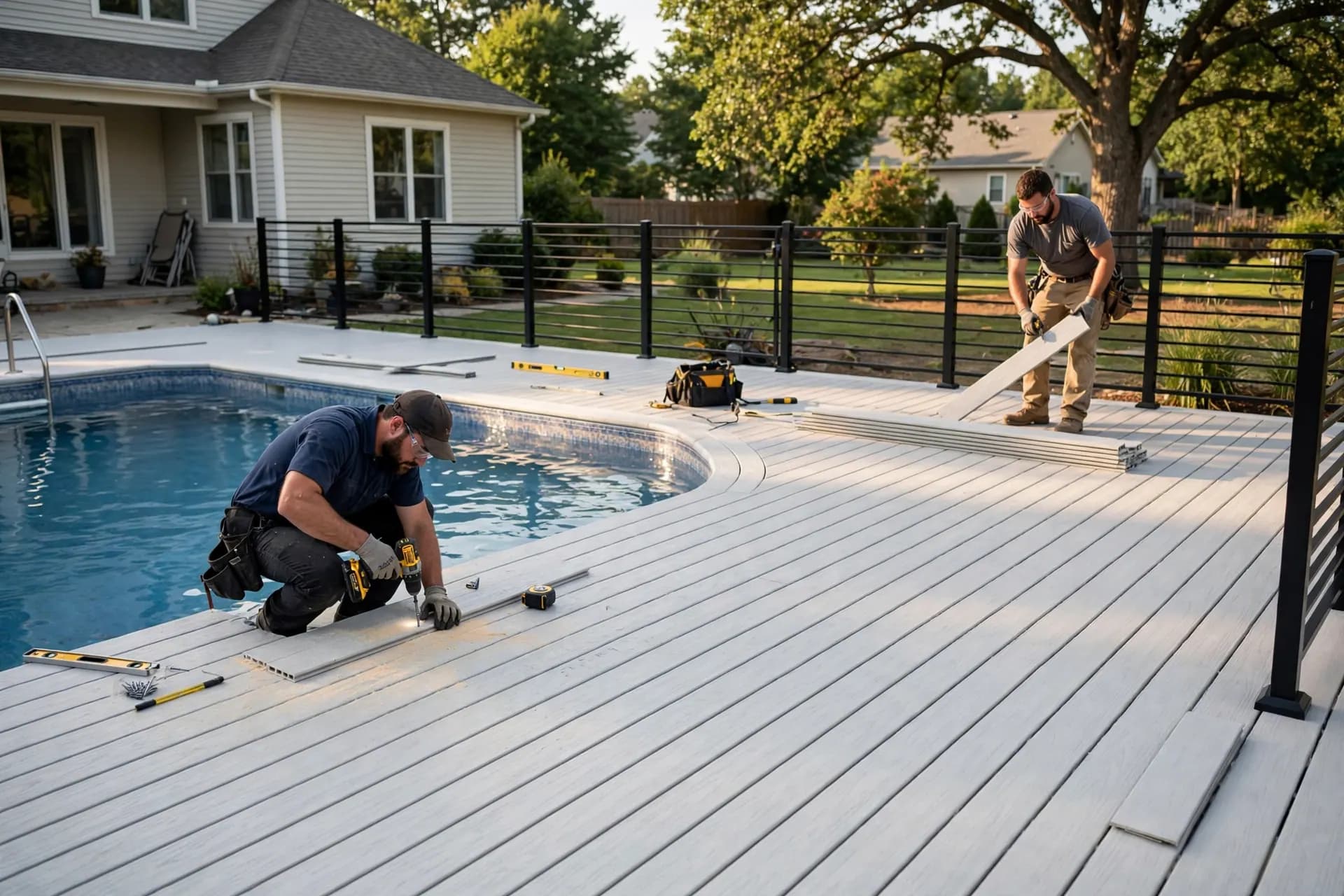
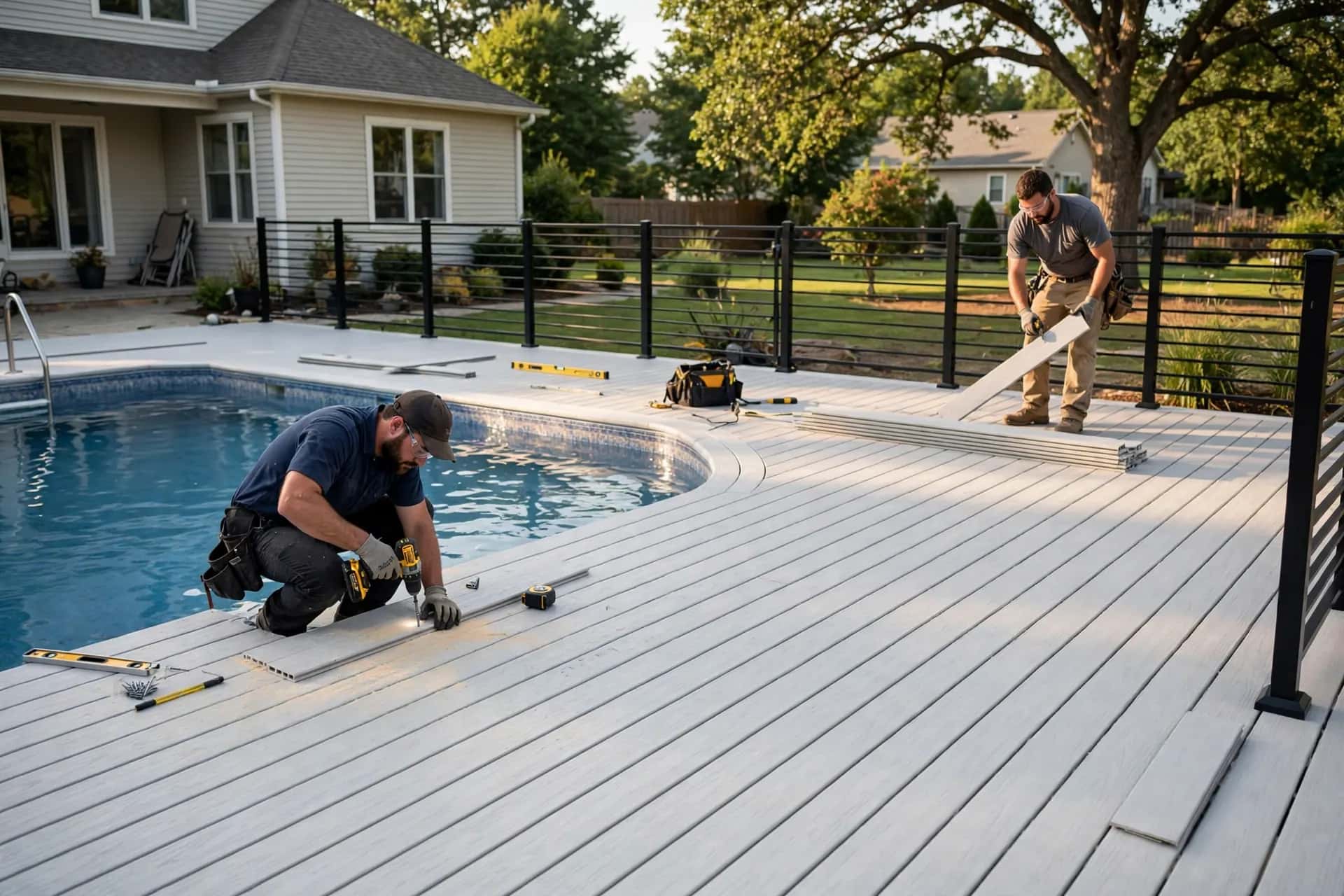
What is the best decking material around a pool?
PVC and capped composite are popular because they don't absorb water and resist pool chemicals. Light colors and textured surfaces matter more here than anywhere, because people walk barefoot.
| Material | Around a pool |
|---|---|
| PVC | Water-proof, light, strong choice for constant splashing |
| Capped composite | Durable and low maintenance; choose lighter, textured boards |
| Pressure-treated wood | Economical; needs frequent sealing and splinter checks |
| Cedar | Comfortable underfoot; requires diligent maintenance when wet |
What safety rules apply to pool decks?
Pools are subject to barrier requirements — fences, gates and latches that restrict access — and a deck can become part of that barrier. Requirements are local, so confirm them before design.
A deck attached to an above-ground pool often includes a lockable gate at the top of the stairs. Guard heights and openings must also prevent climbing. Electrical equipment, lighting and outlets near pools fall under electrical code clearances and should be handled by a licensed electrician.
How should a pool deck be designed?
- Leave access to the pump, filter and liner for maintenance.
- Slope or gap boards so splashed water drains away from the house.
- Keep the deck structure independent of the pool wall — pools shouldn't carry deck loads.
- Plan shade for loungers and a path for wet feet to the house.
How do you maintain a pool deck?
Rinse chlorinated or salt water off regularly, keep gaps clear so the framing dries, and check the frame beneath — framing around pools stays damp longer than most decks. Wood pool decks need more frequent sealing; synthetic boards mainly need cleaning.
How high should a deck be next to an above-ground pool?
Usually a few inches below the pool's top rail so you can sit on the edge and step in easily, while keeping the deck independent of the pool structure.
Measure the pool wall height after the pool is filled and settled. Leave a gap between deck and pool wall for movement and liner access, and plan the stair location so a gate can control access from the yard.
Can you build a wood or composite deck around an in-ground pool?
Yes, though most in-ground pools use concrete or pavers at the coping. Decks often sit beyond the coping zone, raised to meet a sliding door or a change in grade. Drainage away from the pool and house is essential.
How slippery are pool deck boards?
Any wet surface can be slippery. Textured capped composite or PVC with a grip finish performs well; keep boards clean of algae and sunscreen residue, which increase slipperiness. Avoid high-gloss finishes on wood around pools.
How should a pool deck be laid out?
- A clear walkway at least wide enough for two people around the pool entry.
- Lounge space in the sun and seating in the shade.
- Storage for pool equipment and toys.
- A route from pool to house that doesn't cross the cooking area.
How does pool decks differ across the states we serve?
Barefoot comfort around pools depends on summer heat. The figure varies most between Tennessee (54) and Washington (2).
| State | 90°F+ days / yr (median) | What it means |
|---|---|---|
| Georgia | 51 | Hot summers: color, shade and heat build-up shape pool decks |
| Illinois | 17 | Some hot days: test colors and finishes for pool decks in full sun |
| Kansas | 39 | Some hot days: test colors and finishes for pool decks in full sun |
| Maryland | 25 | Some hot days: test colors and finishes for pool decks in full sun |
| Massachusetts | 14 | Mild summers: heat is a minor factor for pool decks |
| Minnesota | 8 | Mild summers: heat is a minor factor for pool decks |
| North Carolina | 49 | Hot summers: color, shade and heat build-up shape pool decks |
| Pennsylvania | 22 | Some hot days: test colors and finishes for pool decks in full sun |
| Tennessee | 54 | Hot summers: color, shade and heat build-up shape pool decks |
| Virginia | 30 | Some hot days: test colors and finishes for pool decks in full sun |
| Washington | 2 | Mild summers: heat is a minor factor for pool decks |
Figures are medians across our covered communities in each state, from NOAA 1991–2020 climate normals and the Census Bureau's 2020–2024 American Community Survey. Each state and community page explains local conditions in more detail.