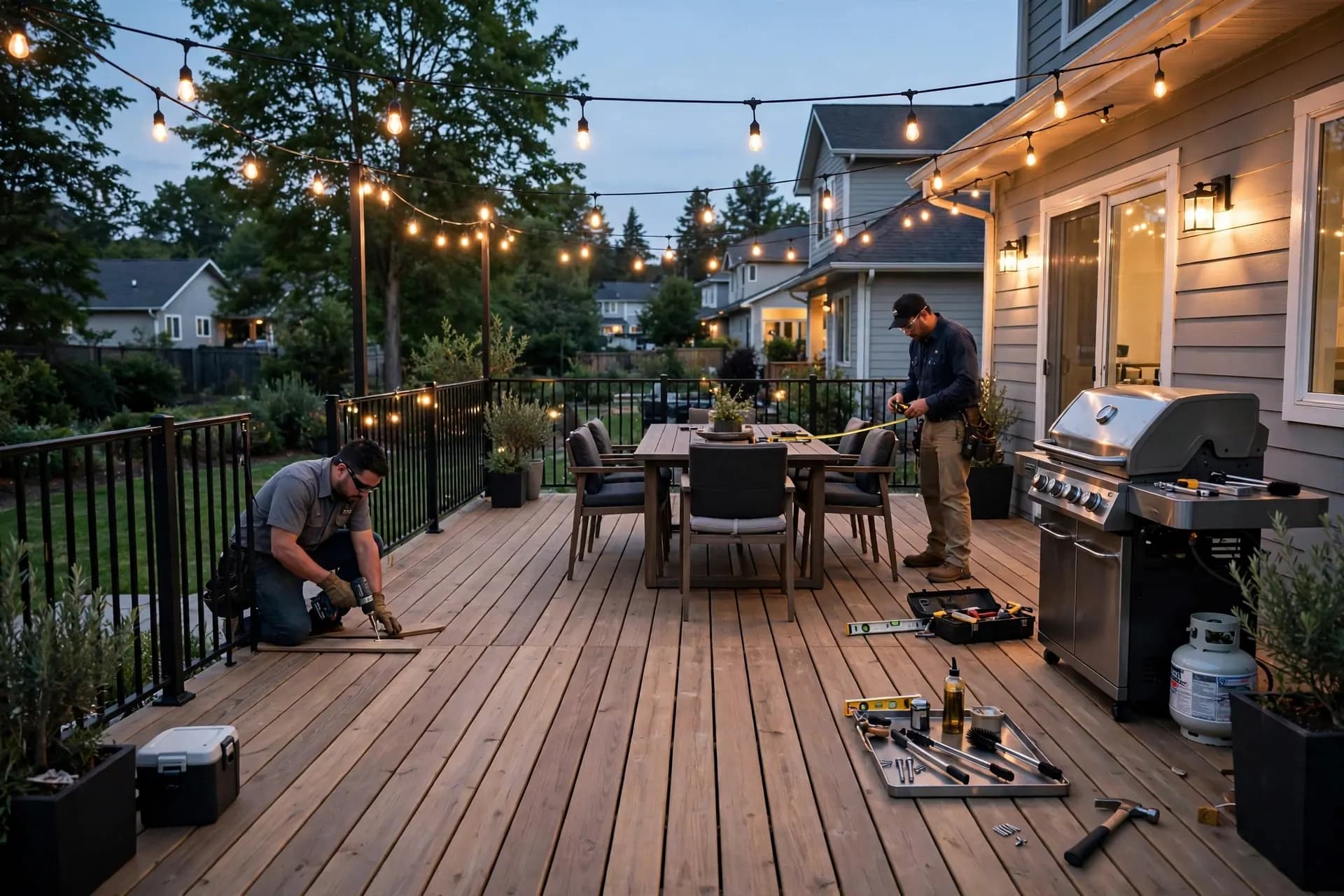
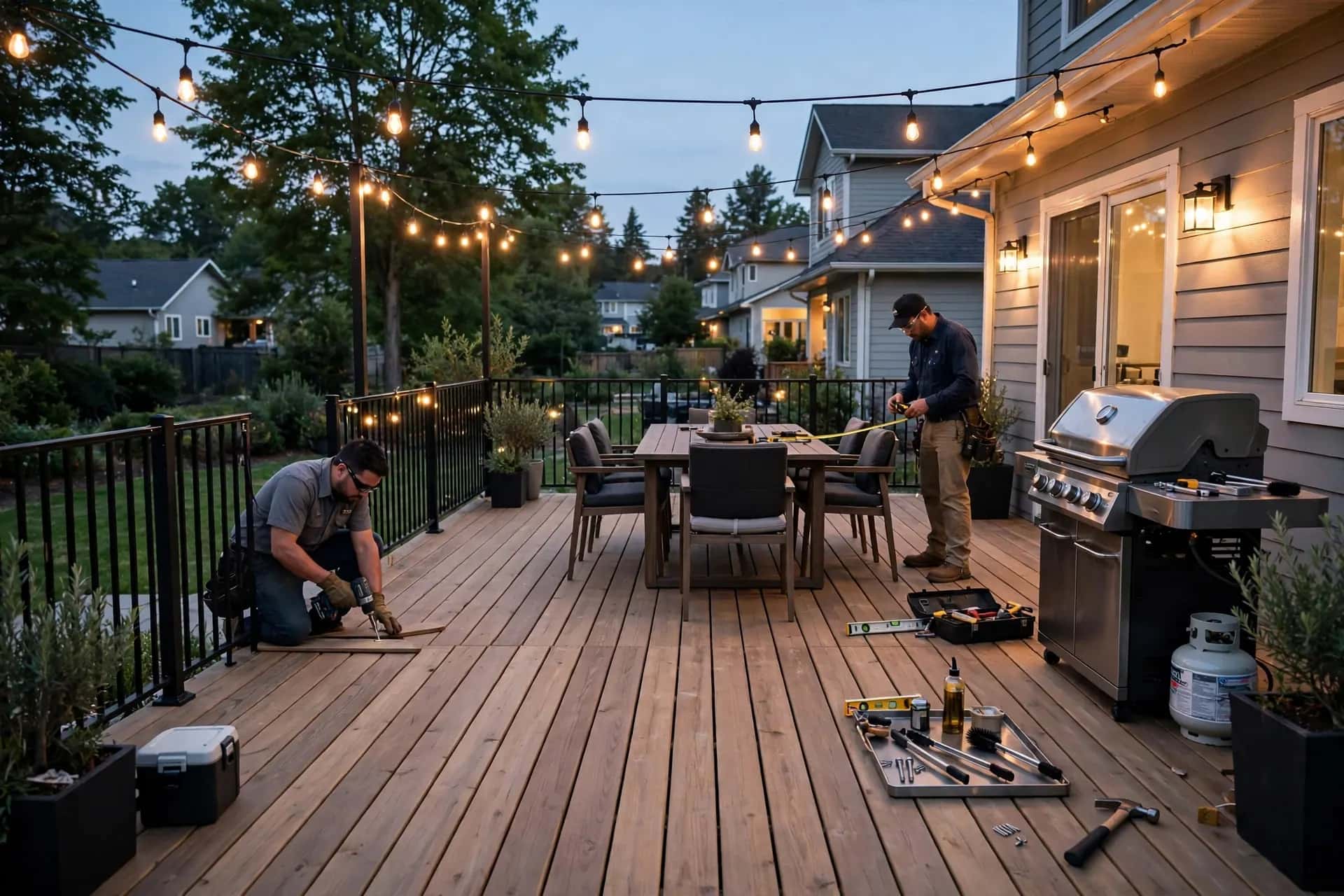
Where does deck lighting matter most for safety?
On stairs, at changes in level, and at the door threshold. Lighting each tread or riser makes step edges visible and reduces trips.
What types of deck lights are there?
| Type | Purpose |
|---|---|
| Stair riser or tread lights | Mark each step |
| Post cap lights | Define edges and corners |
| Under-rail strips | Soft, glare-free perimeter light |
| Recessed deck lights | Pathway markers in the surface |
Should deck lighting be low-voltage?
Most deck lighting kits are low-voltage LED systems powered by a transformer plugged into a weather-resistant GFCI outlet. Line-voltage wiring and new outlets should be installed by a licensed electrician.
Low-voltage systems are safer to route through framing and simpler to add. Timers, photocells or smart controls keep them on only when needed.
When should deck lighting be planned?
During design. Wires can run along joists and inside posts before boards and railings go on, and fixture locations can be aligned with stairs and furniture. Retrofitting later is possible but usually leaves more visible wiring.
Where should deck lights go?
- On every stair tread or riser, or at least the top and bottom steps.
- At level changes between deck sections.
- On posts at corners and gates.
- Under the top rail to wash the deck floor without glare.
- At the door threshold and along paths leaving the deck.
How bright should deck lighting be?
Bright enough to see step edges and obstacles, soft enough to avoid glare. Many small, low-output fixtures usually work better than a few bright floodlights.
Warm color temperatures feel more comfortable outdoors, and shielded fixtures reduce light spill toward neighbors and the night sky.
How are deck lights controlled?
Photocells turn lights on at dusk, timers turn them off later, and smart transformers allow app or voice control and zones — for example, stair lights on all evening while accent lights only come on for gatherings.
What makes deck lights last outdoors?
Fixtures rated for wet locations, sealed connectors, corrosion-resistant housings and wiring protected inside framing. In snowy climates, surface-mounted fixtures should be placed where shovels won't hit them.
What does deck lighting add to a project?
Scope depends on fixture count, transformer size and controls, plus any electrician work for outlets. Adding lighting during construction is typically far simpler than retrofitting.
Are there code requirements for deck stair lighting?
Model codes include stairway illumination requirements for exterior stairs serving the house, often met with a light at the top landing. Check local rules; decorative step lights are often added beyond the minimum.
How does deck lighting differ across the states we serve?
Short, snowy winter evenings increase the value of stair and path lighting. The figure varies most between Minnesota (50) and Georgia (1).
| State | Snowfall, in / yr (median) | What it means |
|---|---|---|
| Georgia | 1 | Light snow: occasional ice is the main winter concern for deck lighting |
| Illinois | 38 | Moderate snow: plan winter use and ice-melt for deck lighting |
| Kansas | 14 | Light snow: occasional ice is the main winter concern for deck lighting |
| Maryland | 29 | Moderate snow: plan winter use and ice-melt for deck lighting |
| Massachusetts | 49 | Heavy snow: load, shoveling and ice drive deck lighting |
| Minnesota | 50 | Heavy snow: load, shoveling and ice drive deck lighting |
| North Carolina | 3 | Light snow: occasional ice is the main winter concern for deck lighting |
| Pennsylvania | 22 | Moderate snow: plan winter use and ice-melt for deck lighting |
| Tennessee | 3 | Light snow: occasional ice is the main winter concern for deck lighting |
| Virginia | 19 | Moderate snow: plan winter use and ice-melt for deck lighting |
| Washington | 4 | Light snow: occasional ice is the main winter concern for deck lighting |
Figures are medians across our covered communities in each state, from NOAA 1991–2020 climate normals and the Census Bureau's 2020–2024 American Community Survey. Each state and community page explains local conditions in more detail.