What are signs of deck footing or post problems?
A deck that slopes or dips where it didn't before, posts that lean or have gaps at the top, posts that are soft or cracked near the ground, and stairs that pull away from the deck.
Footings move for three main reasons: they weren't deep enough to stay below frost and heave in winter, they were too small for the load and settled, or water undermined them. Posts fail most often where they meet the ground, especially when set directly in soil or in concrete that traps water around the wood.
Why do deck footings heave in winter?
Water in the soil expands as it freezes. A footing that doesn't extend below the local frost depth can be lifted by that frozen soil, then drop back unevenly in spring.
Required frost depth is set by your local building department and varies widely — from shallow in the South to several feet in Minnesota. Repairing a heaving footing means replacing it with one that bears at the required depth.
How are deck footings and posts repaired?
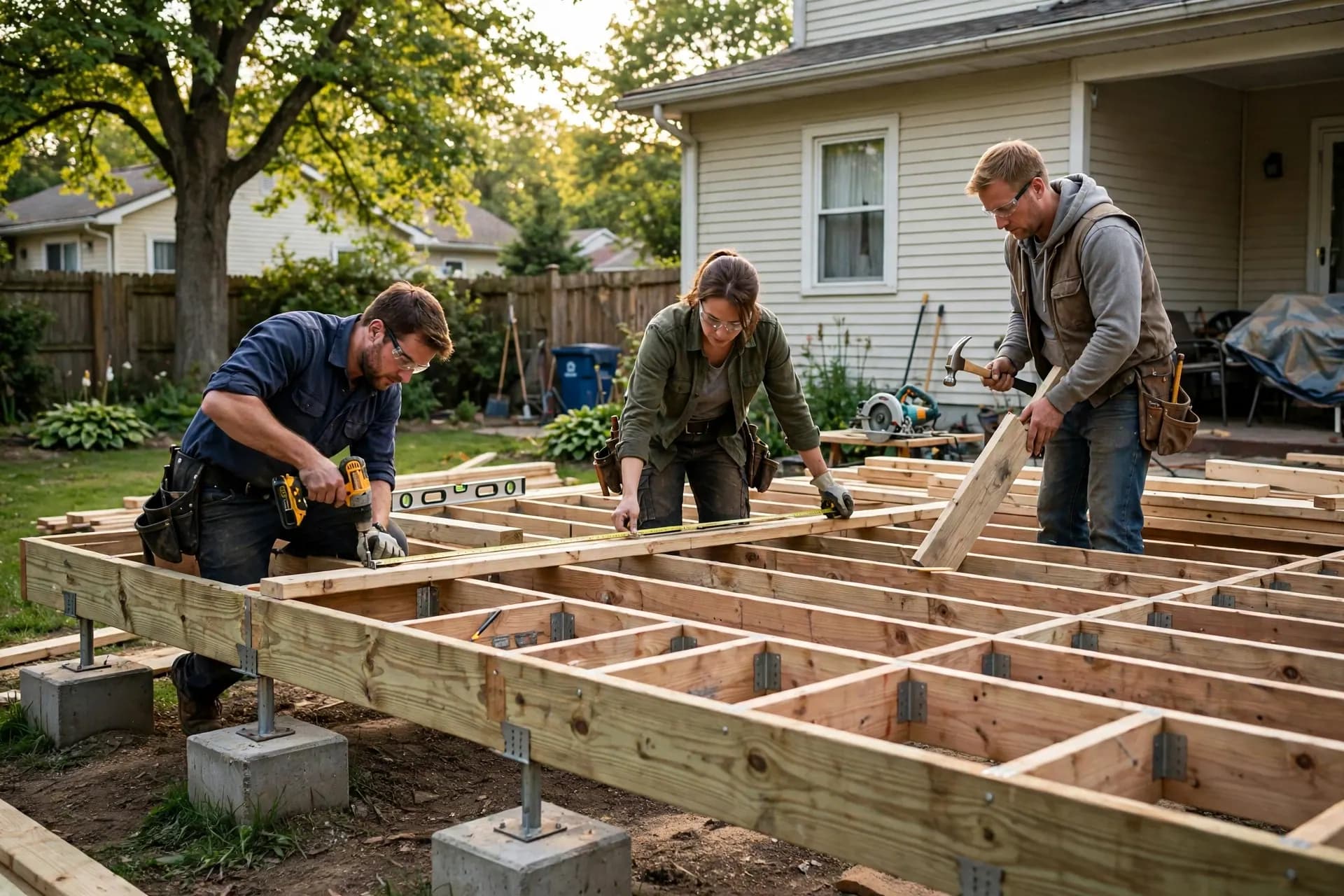
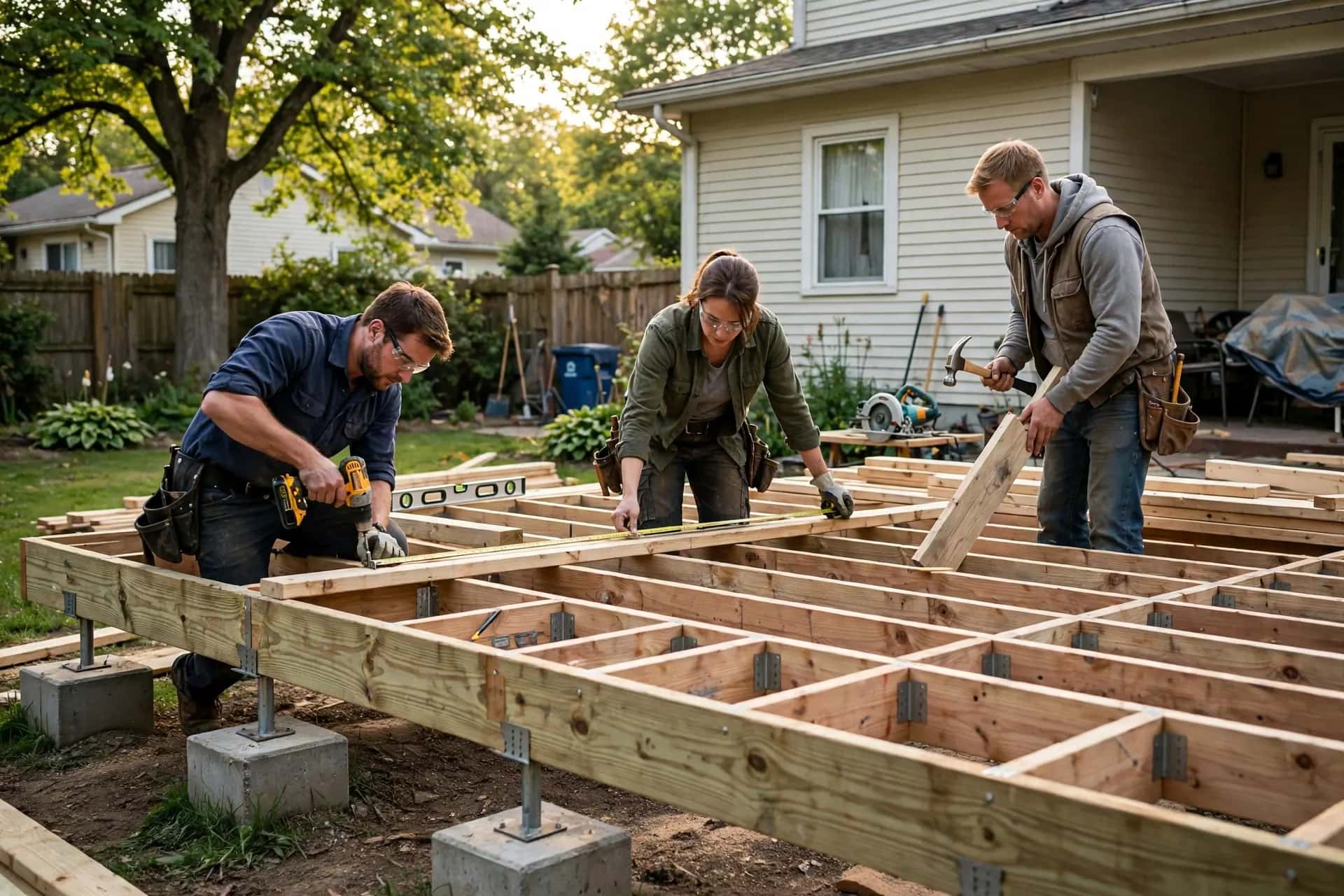
- 1Temporarily support the beam with shoring next to the failing post.
- 2Remove the damaged post and, if needed, excavate the old footing.
- 3Pour a new footing sized and set at the depth your jurisdiction requires.
- 4Install a post base that keeps the post's end grain off the concrete.
- 5Set a new post rated for the exposure, connect it to the beam with proper hardware, and add bracing if the deck is elevated.
Do elevated decks need bracing?
Taller decks need resistance to sway. Knee braces, lateral load connectors and properly sized posts help keep an elevated deck stable.
If an elevated deck moves side to side when people walk on it, post and bracing upgrades are worth discussing — often alongside a ledger check, since the ledger and posts work together to hold the deck in place.
Why do older decks have undersized posts?
Many were built before today's deck guidance was widely used, with small posts, notched connections and footings that weren't sized for the load.
Taller decks need larger posts both for load and to resist buckling and sway. Replacing undersized posts is often paired with new footings, post bases and beam connections so the whole support path is upgraded at once.
How does soil affect deck footings?
Clay soils swell when wet and shrink when dry, loose fill settles, and poor drainage softens soil around footings. Footing size and depth are chosen for the soil and load, and grading that sends downspout water away from the deck protects the footings long-term.
What if the beam is damaged too?
Beams carry the joists to the posts. Rot at the top of a beam under board seams, splits at notches or failed beam splices mean the beam itself needs repair or replacement — typically done with the deck shored on temporary supports.
How does deck footing & post repair differ across the states we serve?
Frost heave is the leading cause of footing movement. The figure varies most between Minnesota (159) and Washington (27).
| State | Freezing days / yr (median) | What it means |
|---|---|---|
| Georgia | 59 | Milder winters, but frost depth still applies to deck footing & post repair |
| Illinois | 128 | Regular freezing: frost-depth footings and sealed wood matter for deck footing & post repair |
| Kansas | 109 | Regular freezing: frost-depth footings and sealed wood matter for deck footing & post repair |
| Maryland | 92 | Regular freezing: frost-depth footings and sealed wood matter for deck footing & post repair |
| Massachusetts | 128 | Regular freezing: frost-depth footings and sealed wood matter for deck footing & post repair |
| Minnesota | 159 | Deep frost: deck footing & post repair must account for heaving and a short season |
| North Carolina | 74 | Milder winters, but frost depth still applies to deck footing & post repair |
| Pennsylvania | 107 | Regular freezing: frost-depth footings and sealed wood matter for deck footing & post repair |
| Tennessee | 86 | Milder winters, but frost depth still applies to deck footing & post repair |
| Virginia | 99 | Regular freezing: frost-depth footings and sealed wood matter for deck footing & post repair |
| Washington | 27 | Milder winters, but frost depth still applies to deck footing & post repair |
Figures are medians across our covered communities in each state, from NOAA 1991–2020 climate normals and the Census Bureau's 2020–2024 American Community Survey. Each state and community page explains local conditions in more detail.