
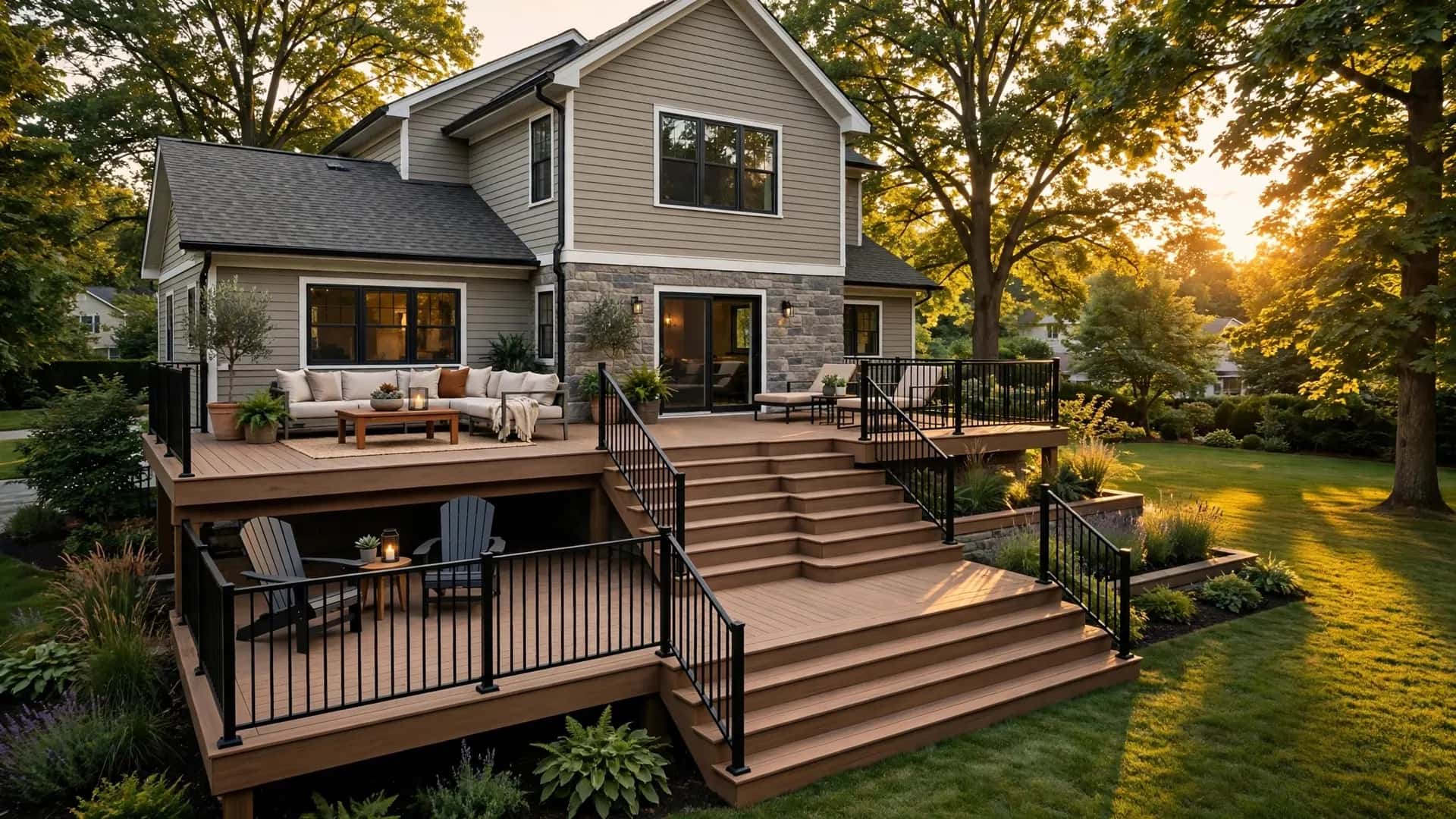
Composite Decking · Boston, MA
Composite Decking in Boston
Composite decking is made from a blend of wood fibers and plastic, usually with a protective outer shell. It doesn't need staining or sealing, resists rot, and comes in a wide range of colors and wood-grain finishes.
Local conditions
What's different about composite decking in Boston
In Greater Boston, composite and PVC are popular because they shrug off snow, freeze-thaw and moisture without staining. Use plastic-bladed shovels and only the ice-melt products your board manufacturer approves. Near the water, pair the decking with stainless or coated fasteners and hardware. On roof decks and upper-level porches, composite's lighter maintenance is especially valuable because access for re-staining is difficult. Confirm that the existing framing is spaced for composite before re-decking an older porch.
What are the benefits of composite decking?
Composite's main advantages are low maintenance, consistent appearance, resistance to rot and insects, and no splinters. You wash it periodically instead of staining and sealing it.
Full detail in our composite decking guide.
What do Boston's housing and climate data mean for this service?
Heat is composite's main tradeoff, and Boston sees about 14 days a year at 90°F or above (NOAA normals, Boston Logan Intl. AP). Board color can be chosen mostly on looks, though full-sun decks still benefit from lighter tones.
With about 77 wet days a year and 69 freeze-thaw days, capped composite's resistance to moisture and splitting is a practical advantage over unsealed wood in Boston. About 49.2 inches of snow a year means choosing ice-melt the manufacturer allows and plastic-bladed shovels.
With 1% detached homes, many Boston composite projects are re-decks of existing backyard decks, so joist spacing on the old frame must be checked first.
| ZIP | Homes | Median year built | Owner-occupied |
|---|---|---|---|
| 02108 | 2,568 | 1938 | 51% |
| 02109 | 2,632 | 1954 | 32% |
| 02110 | 1,711 | 1977 | 70% |
| 02111 | 4,648 | 1980 | 26% |
| 02113 | 4,763 | 1938 | 16% |
| 02114 | 9,912 | 1966 | 22% |
| 02115 | 11,514 | 1938 | 15% |
| 02116 | 14,152 | 1938 | 35% |
| 02118 | 15,828 | 1947 | 33% |
| 02133 | 18 | 1938 | 100% |
| 02163 | 549 | 1987 | 0% |
| 02199 | 1,160 | 1974 | 1% |
| 02203 | n/a | n/a | n/a |
| 02210 | 5,535 | 2012 | 25% |
| 02215 | 9,334 | 1955 | 9% |
Permits for composite decking in Boston
Massachusetts uses a statewide building code (780 CMR) administered by the Board of Building Regulations and Standards and enforced by local building officials. Whether your project needs a permit depends on its scope and your exact address, so check with the building department that serves it before work begins.
Authoritative references
- Prescriptive Residential Wood Deck Construction Guide (DCA 6) — American Wood Council
- U.S. Climate Normals — NOAA National Centers for Environmental Information
Scope
What moves the scope of composite decking
- Board line (capped vs. uncapped, premium vs. standard)
- Color and heat-mitigating options
- Joist spacing changes on an existing frame
- Picture framing, inlays and diagonal layouts
- Matching composite stair treads, fascia and railings
FAQs
Composite Decking questions
Does composite decking get hot?
It can, especially darker colors in direct sun. Lighter colors, shade and boards designed to run cooler reduce the effect.
How do you clean composite decking?
Most manufacturers recommend periodic washing with soap and water and a soft brush. Follow the manufacturer's care guide for stains and pressure-washer use.
Can composite go over my existing wood deck frame?
Only if the frame is sound and spaced correctly for the boards. Many older wood decks were framed for wider spacing than composite allows, so extra joists may be needed.
Is composite slippery?
Textured, capped composite generally provides reasonable traction, but any deck can be slippery when wet, icy or covered in debris. Keep it clean, and avoid using rock salt unless the manufacturer allows it.
Boston, MA
Composite Decking in Boston
Call (888) 555-0123 to talk with a deck specialist about your project.