
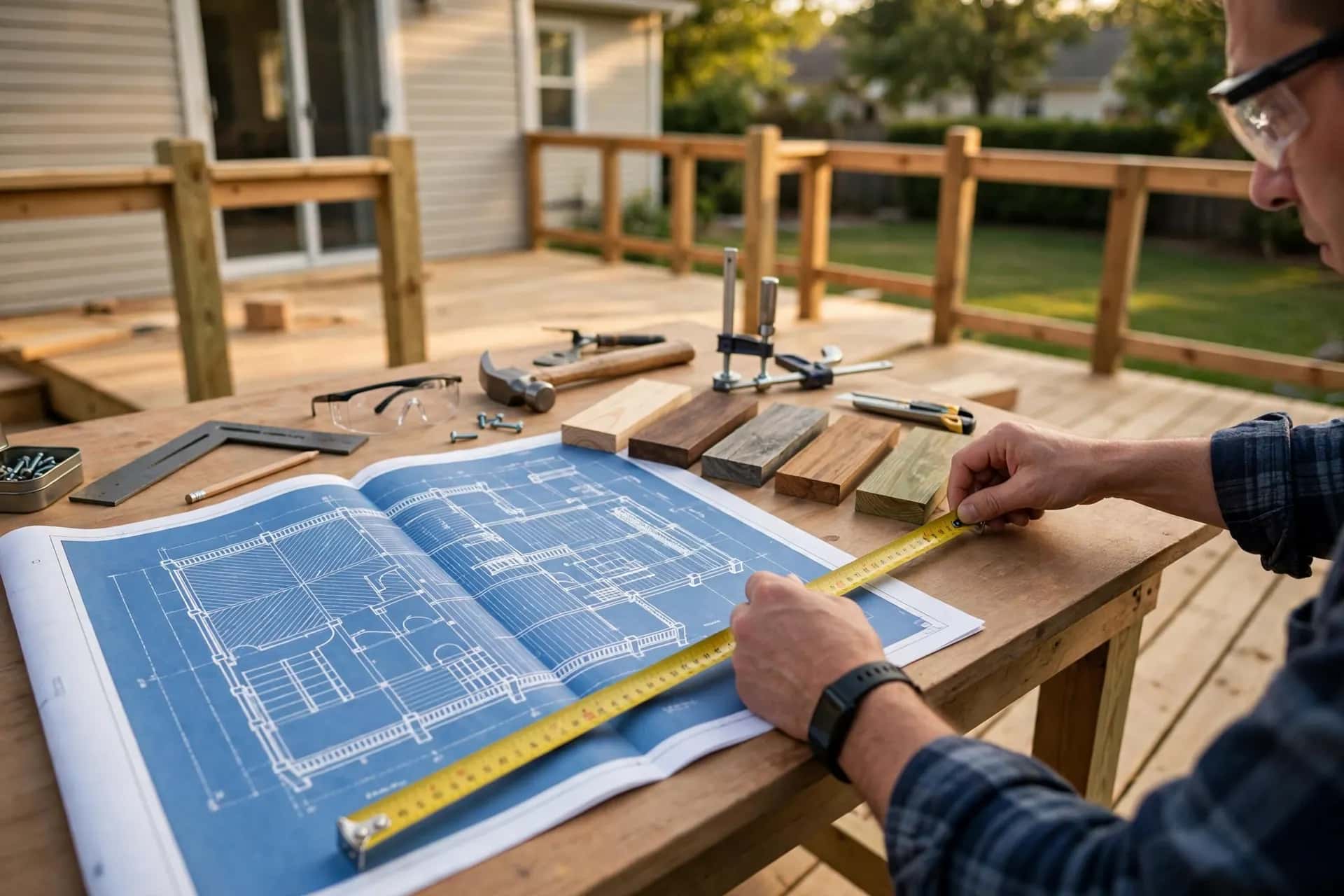
By Deck Building Services · Last reviewed
What questions should you ask a deck builder?
Ask about insurance and licensing, who pulls permits, how footings and the ledger will be built, what the written scope includes, how changes and hidden damage are handled, and what warranties apply.
- 1Are you insured for liability and, if you have employees, workers' compensation? Can I see the certificates?
- 2Do you hold the license or registration my state requires for home improvement work?
- 3Who applies for the building permit and schedules inspections?
- 4How deep and how large will the footings be, and why?
- 5How will the deck attach to the house, and how will the ledger be flashed — or should it be freestanding?
- 6What joist spacing will you use for the decking I've chosen?
- 7Which exact decking, railing and fastener products are included?
- 8What does the written scope include — demolition, haul-away, stairs, railings, skirting, cleanup?
- 9How are change orders and hidden damage (such as rot behind an old ledger) priced?
- 10What is the payment schedule, and what deposit is required?
- 11What warranty do you provide on workmanship, and what manufacturer warranties apply?
- 12Who will be on site, and will any work be subcontracted?
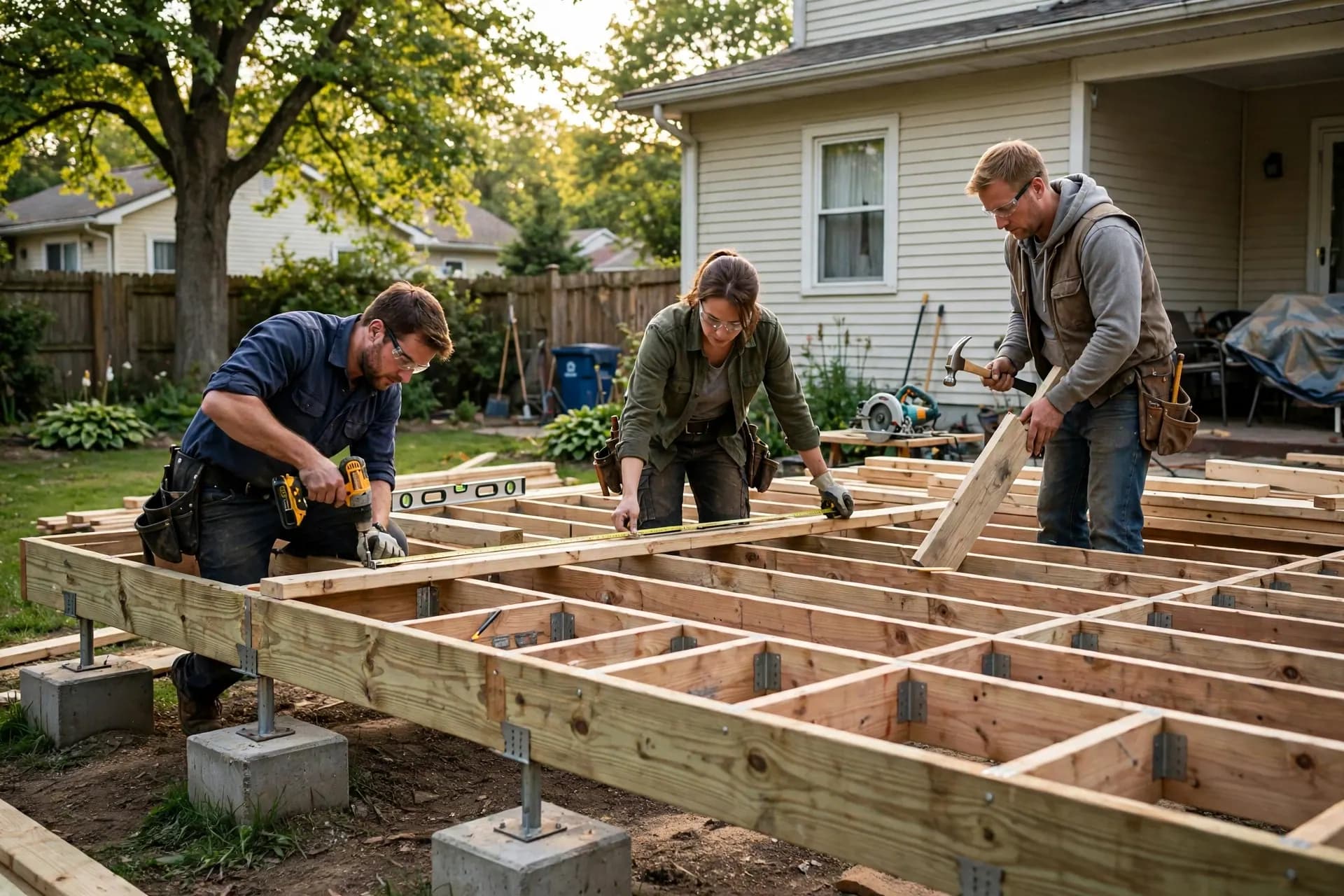
Do deck builders need a license?
It depends on the state and sometimes the city. Several of the states we serve license or register home improvement or residential contractors, so check with your state's licensing or consumer protection agency.
Licensing rules differ in who must register, the project-value thresholds and what the license covers. Your state agency can confirm whether a contractor's license or registration is current and whether there are complaints on file. Separately, the building permit for your deck is issued by your local building department.
What are red flags when hiring a deck contractor?
| Red flag | Why it matters |
|---|---|
| Suggests skipping the permit | No independent inspection of footings and framing; problems at resale |
| Vague, one-line estimate | Disputes later over what was included |
| Large cash deposit before scheduling | Higher risk if the job never starts |
| Can't explain ledger flashing or footing depth | These details decide whether the deck lasts and stays safe |
| Plans to put composite on an old wide-spaced frame | May void the decking warranty and cause sagging |
| No proof of insurance | You could be exposed if someone is hurt on your property |
How do you compare deck estimates fairly?
Line up bids so each covers the same size, height, decking line, railing system, stairs and add-ons. Then compare the hidden structure: footing count and depth, beam and joist sizes, connector hardware and ledger detail. The lowest number often reflects a smaller scope, not a better price.
- Same square footage and height?
- Same board line and color, or a cheaper substitute?
- Railing linear feet and system included?
- Permit, drawings and inspection fees included?
- Demolition and disposal included?
What should a deck contract include?
- Detailed scope and drawings or a sketch with dimensions
- Specific products (brand, line, color) for decking, railings and fasteners
- Permit responsibility and inspection schedule
- Start window and expected duration
- Payment schedule tied to milestones
- Change-order and hidden-damage process
- Cleanup and debris removal
- Workmanship warranty terms
How do you judge a deck builder's past work?
Ask to see photos of decks the contractor actually built, ideally including framing shots taken before the boards went on — those show footing, beam and connector quality that finished photos hide. If possible, ask for addresses of completed decks you can view from the street, and ask past clients whether the job finished on schedule and how changes were handled.