
By Deck Building Services · Last reviewed
Why do deck footings need to go below the frost line?
Water in soil expands when it freezes. A footing above the frost line can be lifted by frozen soil and drop back unevenly in spring — frost heave — throwing the deck out of level and stressing connections.
How do you find the required footing depth for your address?
- 1Call or visit your local building department's website.
- 2Ask for the frost depth (sometimes called the footing depth) used for permits.
- 3Ask whether they require a footing inspection before concrete is poured.
- 4Ask about soil conditions or engineering triggers in your area.
Depths vary widely across the states we serve — from shallow requirements in parts of the South to depths of several feet around Minneapolis–Saint Paul. Our community pages show how many freezing days a year each area averages, which explains why requirements differ.
How big should deck footings be?
Footing diameter or area depends on the load each post carries and the soil's bearing capacity. Prescriptive guides such as the American Wood Council's DCA 6 provide footing size tables by joist span, beam span and soil.
| Factor | Effect |
|---|---|
| Post spacing | Wider spacing puts more load on each footing |
| Joist span | Longer joists carry more deck area to each beam |
| Snow load | Heavier design loads in snowy regions |
| Soil bearing capacity | Weaker soils need larger footings |
| Hot tubs or heavy features | Concentrated loads need engineered footings |
What types of deck footings are used?
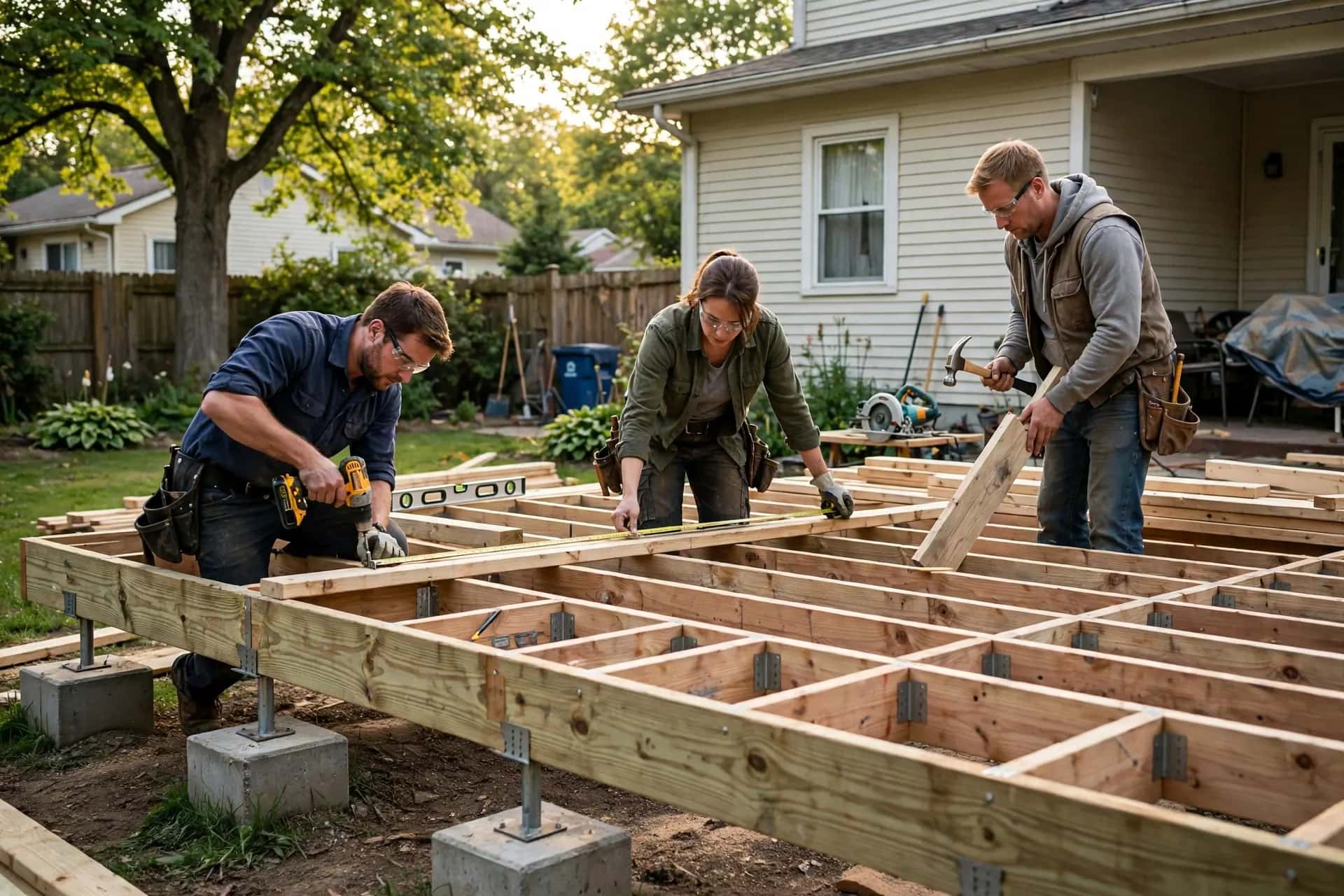
- Poured concrete piers in tube forms with a post base on top.
- Concrete with a wider spread footing at the bottom for more bearing area.
- Helical (screw) piles, often used where digging is difficult — check local acceptance.
- Precast blocks on the surface are generally only allowed for small, low, freestanding decks where local code permits.
Should posts be set in concrete?
Many builders set posts on raised metal post bases anchored to the footing so the end grain stays dry and the post can be replaced. Embedding posts directly in concrete can trap water against the wood.
What happens at a footing inspection?
In jurisdictions that require it, an inspector checks footing holes before concrete is poured: depth below grade, diameter or size, that the bottom rests on undisturbed soil, and that holes are free of loose material and water. Pouring before the inspection can mean digging the footing back out, so schedule inspections into the project timeline.
How do footings relate to the ledger and beam?
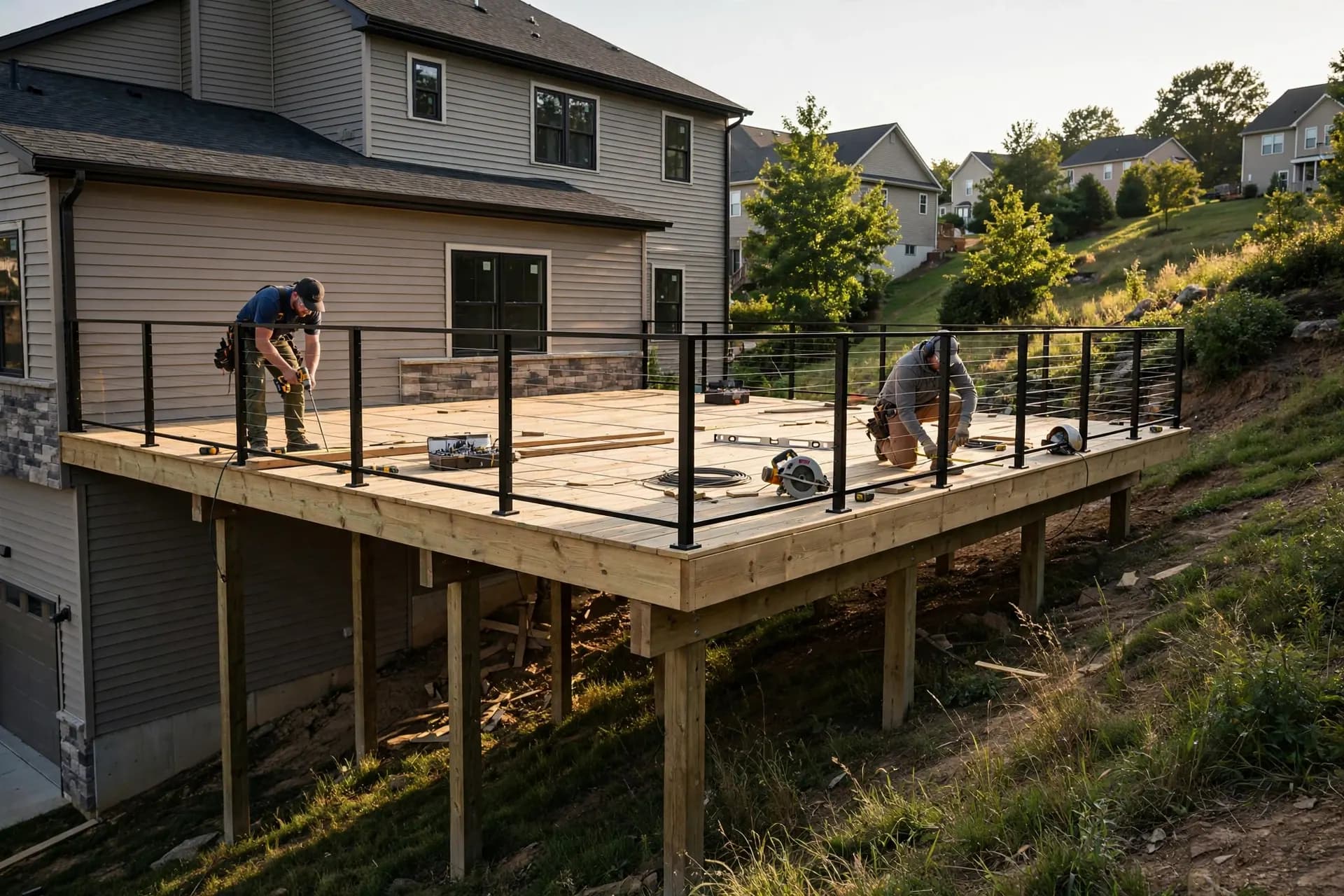
On an attached deck, the ledger carries one side of the deck into the house foundation while footings carry the outer beam. If the footings heave or settle but the house doesn't, the deck racks and stresses the ledger connection. That's another reason footings must bear at the same reliable depth the code requires.
What are common deck footing mistakes?
- Stopping above the local frost depth.
- Undersized footings for long joist or beam spans.
- Bearing on loose fill instead of undisturbed soil.
- Posts buried directly in soil or trapped in concrete.
- Downspouts discharging next to footings.